
Graham Arnold Receives Hero's Welcome in Sydney After Guiding Iraq to Historic World Cup Qualification
Sydney Airport erupted in celebration on Sunday night as hundreds of jubilant Iraqi football fans greeted head coach Graham Arnold, who successfully led the national team to their first FIFA World Cup in 40 years. The Australian manager returned home to an unexpected yet passionate reception after a challenging and ultimately triumphant qualification campaign.
A Celebratory Return to Australian Shores
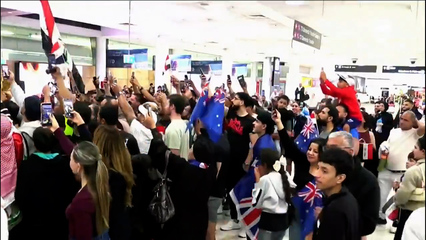
The scene at Sydney Airport was one of unbridled joy, as Iraqi fans, waving national and Australian flags, danced to drums and tambourines, held aloft placards, and chanted "Arnie, Arnie, Arnie, oi, oi, oi!" for the 62-year-old coach. Arnold, visibly moved by the reception, paused to smile and wave, telling local media, "Crazy, crazy. I didn’t expect this here in Australia. Obviously in Iraq. But it’s incredible."
Reports indicate that local Iraqi football fans were alerted to Arnold’s return flight by Iraq’s Football Association (IFA), prompting their spontaneous gathering. Arnold expressed his pride in the players, stating, "Making many Iraqis happy is very important and that was the main thing." He also apologised for not being able to join celebrations in Baghdad due to airspace closures.
Iraq's Historic World Cup Return

The Lions of Mesopotamia secured their place in the 2026 FIFA World Cup after a dramatic 2-1 victory over Bolivia in the intercontinental playoff final in Mexico. This marks Iraq's return to the global showpiece event for the first time since 1986, ending a 40-year drought.
The qualification campaign was fraught with challenges, as Iraq navigated a tumultuous period marked by the Middle East conflict. Logistical nightmares, including several players being stranded across the region, threatened to derail their journey, yet the team persevered against strong opposition. The players themselves received a hero's welcome upon their return home, with thousands of fans lining the streets of central Baghdad.
Olley News Insight: The unifying power of football is once again evident. In times of regional conflict, a sporting achievement like Iraq's World Cup qualification offers a profound sense of national pride and a rare moment of collective joy, transcending geopolitical complexities.
Arnold's Strategic Leadership
Former Australia coach Graham Arnold took the helm of the Iraqi team in May, guiding them through a demanding qualification process. Under his leadership, Iraq achieved three wins, three draws, and two losses in their World Cup qualification campaign, culminating in a 3-2 aggregate win against the United Arab Emirates in the Asian Football Confederation’s (AFC) final round.
Facing the profound impact of the US-Israeli war on Iran, Arnold successfully urged FIFA to arrange a charter flight for the Iraqi squad, ensuring they reached Mexico well in advance of the March 31 final. During the critical playoff period, Arnold implemented a strict ban on social media, telling players, "I did not want them to think of what is going on in the Middle East because they had to focus on the job we had here."
The Road to World Cup 2026
Iraq now prepares for a formidable challenge in Group I of the 2026 FIFA World Cup, where they will face football giants France, Norway, and Senegal. Their opening fixture is scheduled for June 16 against Norway in Boston. This will be followed by a highly anticipated clash with 2018 champions France on June 22 in Philadelphia, before concluding their group stage against Senegal four days later in Toronto, Canada.
Key Takeaways
- Graham Arnold received a jubilant welcome from Iraqi fans in Sydney after guiding Iraq to the FIFA World Cup.
- This marks Iraq's first World Cup qualification in 40 years, following a 2-1 playoff victory over Bolivia.
- The team overcame significant logistical and emotional challenges stemming from regional conflict.
- Arnold implemented strategic measures, including a social media ban and advocating for a FIFA charter flight.
- Iraq is placed in Group I for the World Cup, alongside France, Norway, and Senegal, with their first match on June 16.


0 Comments