
DR Congo to Accept Third-Country Deportees from United States
The Democratic Republic of Congo has entered into an agreement to accept migrants deported from the United States who are not Congolese nationals, a deal set to take effect this month.
Agreement Details and Logistics
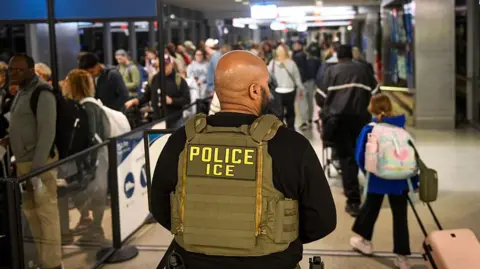
Under the new arrangement, confirmed by the Ministry of Communication, a temporary reception system has been established in Kinshasa, the capital, with selected facilities ready to accommodate arrivals. The United States will provide "logistical and technical support," ensuring that the Congolese government incurs no financial costs for the scheme. The exact number of deportees to be accepted has not been disclosed.
Humanitarian and Policy Commitments
Congolese officials have clarified that no plans are in place to transfer migrants to their home countries, addressing concerns about potential persecution. They stated that accepting these "third-country migrants" aligns with the DR Congo's commitment to human dignity, international solidarity, and the protection of migrant rights. The government also emphasized that this initiative is neither a "permanent relocation mechanism" nor an "outsourcing of migration policies."
US Immigration Policy and Condemnation
The agreement comes as part of the US President Donald Trump administration's stringent approach to immigration, which has seen dozens of individuals deported to third countries since January. While the US State Department refrained from commenting on diplomatic communications, it reaffirmed its "unwavering commitment to end illegal and mass immigration and bolster America's border security." Human rights campaigners have widely condemned this policy, with some raising questions about its legality.
Broader African Context and Financial Implications
The DR Congo joins other African nations, including Eswatini, Ghana, and South Sudan, in receiving deportees from the US. Recently, eight individuals from various African countries were deported to Uganda. A minority report from the US Senate's Committee on Foreign Relations estimates that the Trump administration has likely spent over $40 million on third-country deportations up to January 2026, with direct aid exceeding $32 million provided to countries such as Equatorial Guinea, Rwanda, El Salvador, Eswatini, and Palau.
Geopolitical Considerations
This migration deal unfolds amidst ongoing diplomatic engagements between the US and the DR Congo. The United States is actively negotiating a minerals deal with the central African nation, seeking access to its rich reserves of critical metals like cobalt, tantalum, lithium, and copper. Additionally, the Trump administration has previously facilitated a peace agreement between DR Congo and Rwanda, although its full implementation continues to face challenges.
Olley News Insight: The agreement between the DR Congo and the United States highlights the complex interplay of humanitarian principles, national security interests, and geopolitical leverage in international migration policies. While the DR Congo frames its participation as a commitment to human dignity, the underlying strategic interests, particularly regarding mineral resources, cannot be overlooked.
Key Takeaways
- The DR Congo has agreed to receive non-Congolese migrants deported from the US, effective this month.
- The US will provide logistical and technical support, with no financial cost to the DR Congo.
- Congolese officials affirm the deal aligns with human dignity and migrant rights, denying plans for further re-transfers.
- The policy is part of the Trump administration's hard-line immigration stance, drawing criticism from human rights groups.
- DR Congo joins other African nations participating in similar deportation agreements, with significant financial outlays from the US.
- The deal coincides with US efforts to secure mineral resources and maintain peace in the region.


0 Comments