
Sexual Violence Deemed 'Everyday Life' in Parts of Sudan Amidst Ongoing Conflict
A new report by medical charity Médecins Sans Frontières (MSF) reveals that rape and sexual violence have become "part of everyday life" in Sudan, persisting even in regions where active conflict has subsided. The charity describes sexual assault as a "defining feature" of the nearly three-year civil war, overwhelmingly perpetrated by armed men and often accompanied by extreme brutality and humiliation.
MSF Report Highlights Pervasive Abuse
The comprehensive report, drawing from testimonies of 3,396 victims treated in MSF-supported facilities across North and South Darfur between January 2024 and November 2025, underscores the severe and widespread nature of sexual violence. While both Sudan's army and the paramilitary Rapid Support Forces (RSF) are accused, the vast majority of perpetrators identified by survivors in Darfur, an RSF stronghold, were their fighters.
Brutal Attacks in Conflict Hotspots
Many documented cases occurred in North Darfur following RSF takeovers of displaced persons camps like Zamzam and Abu Shouk, and the city of el-Fasher in October last year. MSF notes this period saw "unimaginable brutality," with over 90% of victims treated assaulted while seeking safety. These attacks frequently involved multiple rapists, beatings, and even the murder of relatives. One survivor recounted, "The first man raped me twice, the second once, the third four times and the fourth once... We were raped throughout the night."
Ethnic Dimension and Historical Roots
The report reinforces numerous accounts of ethnic targeting, stating that non-Arab communities such as the Zaghawa, Massalit, and Fur were "systematically targeted." This pattern is deeply rooted in Darfur's long history of conflict, where sexual violence has been a persistent tactic. The RSF leadership has acknowledged "individual violations" but disputes the scale of atrocities, stating investigations are underway.
Violence Becomes Routine Outside Front Lines
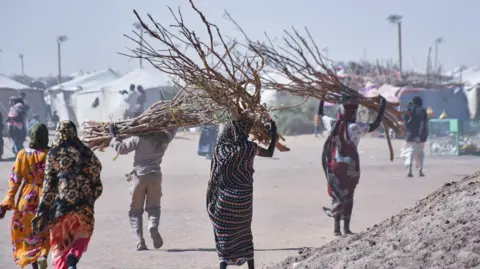
Alarmingly, MSF reports that sexual violence does not cease when front lines shift, becoming an "insidious" reality in areas far from active conflict, such as South Darfur. More than 1,300 survivors (56% of those seeking help in the state) were raped while performing daily activities like collecting firewood or water, working in fields, or travelling to farms. A 40-year-old woman stated, "Every day, when people go to the market, there are four or five cases of rape... The only way is to try to stay home."
In South Darfur, 68% of victims identified armed men as their assailants, though civilians, criminal groups, and intimate partners were also implicated. Disturbingly, one in five survivors in this state was under 18, with 41 cases involving children under five.
Challenges to Care and Calls for Accountability
MSF emphasizes that its data represents only a fraction of the true scale of abuse due to significant barriers to care, including ongoing insecurity, displacement, intense social stigma, and the absence of functioning protection services. The medical charity asserts that the humanitarian system has failed to meet survivors' needs and urgently calls for greater accountability and action from all parties involved.
Olley News Insight: The normalization of sexual violence, as detailed in the MSF report, presents a profound humanitarian crisis that demands urgent international attention beyond mere conflict resolution. Addressing the deeply entrenched gender inequalities and fostering a culture of accountability are critical for any future peace and stability in Sudan.
Key Takeaways
- Sexual violence, including rape, is a "defining feature" of the Sudan conflict and has become "part of everyday life" in affected areas.
- The report by Médecins Sans Frontières (MSF) is based on testimonies from 3,396 victims in North and South Darfur.
- The paramilitary Rapid Support Forces (RSF) are identified as the primary perpetrators of sexual violence in Darfur.
- Non-Arab communities such as the Zaghawa, Massalit, and Fur have been systematically targeted.
- Violence persists even in regions away from active front lines, with victims often assaulted during routine daily activities.
- A significant number of child victims were reported, with one in five survivors in South Darfur under the age of 18, including 41 under five.
- MSF highlights severe underreporting due to insecurity, displacement, stigma, and lack of support services, calling for accountability and action.


0 Comments