
Iranian Missiles Strike Near Israeli Nuclear Site, Injuring Over 160
More than 160 people have been injured, some seriously, following Iranian missile strikes on two southern Israeli towns. The attacks occurred on Saturday evening, hitting residential areas in Arad and Dimona, both located near a significant Israeli nuclear facility. This escalation comes amidst ongoing tensions in the region.
Missile Barrage Hits Southern Israeli Towns
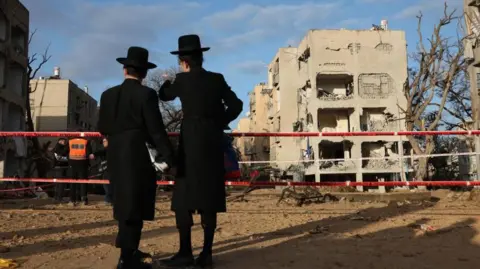
Emergency officials in Israel confirmed that 84 individuals are receiving treatment in Arad, while another 78 are being cared for in Dimona. Casualties include a 10-year-old boy, whose condition is described as serious. Local residents in Arad recounted terrifying blasts, with missiles causing substantial damage to several buildings and leaving a deep crater.
Despite the proximity of the strikes, the International Atomic Energy Agency (IAEA) has stated it is unaware of any damage to the nuclear research facility situated approximately 13km (eight miles) outside Dimona. Furthermore, no increase in off-site radiation levels has been reported at Iran's Natanz nuclear facility, which was reportedly targeted earlier on Saturday.
Air Defence Systems Breached
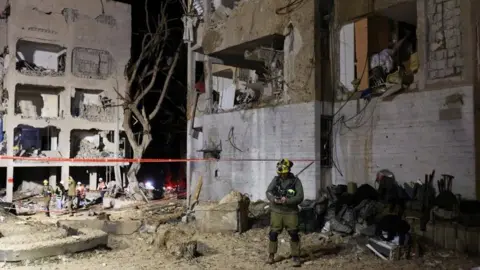
Iranian ballistic missiles successfully penetrated Israel's sophisticated air defence systems late Saturday, resulting in direct hits on buildings in Arad and Dimona. Israeli firefighters reported that interceptors launched to counter the threats failed to strike, leading to two direct impacts from ballistic missiles carrying warheads weighing hundreds of kilograms.
Authorities are now investigating the failure of the air defence systems to prevent these strikes, which underscore a significant challenge in regional security.
Dimona Reactor: A Critical Target
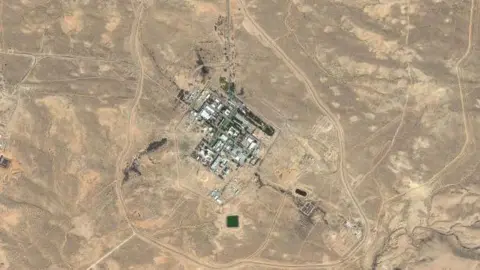
The Shimon Peres Negev Nuclear Research Center, colloquially known as the "Dimona reactor," is situated in the Negev desert. It is widely acknowledged as the site where Israel developed its undeclared nuclear weapons arsenal over six decades, maintaining a policy of ambiguity. Israel remains the sole nuclear power in the Middle East, making any targeting of this facility a matter of extreme gravity.
Both Israel and the United States have consistently identified the elimination of any potential Iranian capacity to develop a nuclear bomb as a primary objective in the ongoing conflict.
Iranian Retaliation for Natanz Attack
Iranian state television reported that Saturday's missile strikes were carried out in retaliation for an earlier attack on Iran's Natanz nuclear facility. Iran's Atomic Energy Organisation described the Natanz attack as a violation of the Treaty on the Non-Proliferation of Nuclear Weapons, though it confirmed no leakage of radioactive materials or danger to residents was reported.
Natanz has been previously targeted during the conflict, including in the initial days of the war that commenced on 28 February, and during a 12-day confrontation in June. The Israel Defense Forces (IDF) stated they were unaware of a strike in the Natanz area on Saturday.
Key Takeaways
- Over 160 people were injured in Iranian missile strikes on the Israeli towns of Arad and Dimona.
- The towns are located near Israel's undeclared nuclear research facility in the Negev desert.
- Iranian state TV claimed the strikes were in response to an attack on Iran's Natanz nuclear facility.
- Israeli air defence systems failed to intercept some ballistic missiles, leading to direct hits.
- Neither Israel's Dimona facility nor Iran's Natanz facility reported any damage or radioactive leakage from the respective strikes.
Olley News Insight: The recent missile strikes represent a concerning escalation in the regional conflict, notably due to the proximity to a sensitive nuclear site and the reported failure of advanced air defence systems. This event underscores the volatile nature of the current geopolitical landscape and raises questions about the effectiveness of existing deterrents and protective measures in preventing direct hits on civilian areas.


0 Comments