
Heightened Tensions: US and Iran Trade 'Hell' Threats Amid Search for Missing Airman
As the search intensifies for a missing American airman following the downing of a US F-15 jet, the United States and Iran have exchanged stark warnings, threatening regional escalation. The latest developments include renewed missile strikes by Iran, continued bombardments by US and Israeli forces, and a concerning attack on Iran's sole operational nuclear power plant.
Escalating Rhetoric and Ultimatum
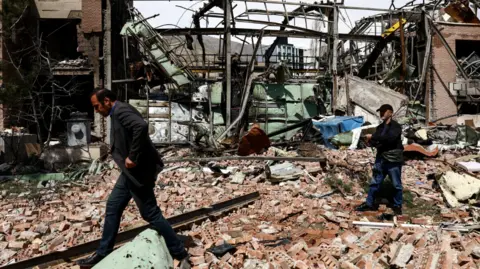
US President Donald Trump has issued a severe warning, stating that "all hell would rain down on" Iran if it failed to agree to a deal or reopen the Strait of Hormuz within 48 hours. This threat, reiterated on Truth Social, was met with equally strong rhetoric from Tehran. Ebrahim Zolfaghari, spokesperson for Khatam al-Anbiya Central Headquarters, countered, warning that "the entire region will turn into hell" for US and Israeli forces should hostilities escalate.
Aerial Engagements and Missing US Airman
The volatile situation was underscored by the shooting down of a US F-15 fighter jet over southern Iran on Friday. While the pilot was reportedly rescued, the search for a missing American crew member continues. Iranian officials have urged citizens to assist in finding the crew member "alive," offering rewards for his capture. During the search-and-rescue mission, a US A-10 Warthog aircraft also sustained damage from hostile fire, though its pilot was successfully rescued.
Strikes on Iranian Sites, Including Nuclear Facility
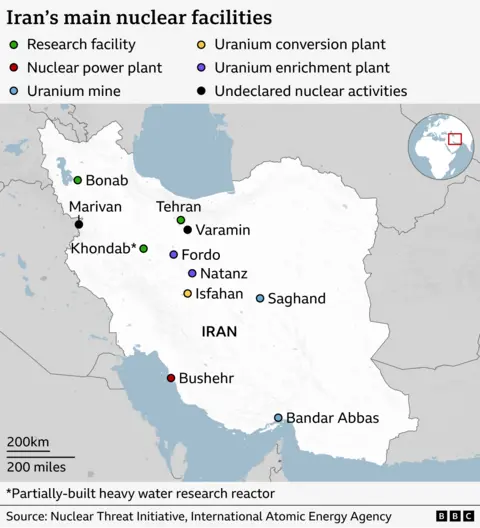
US and Israeli forces maintained their bombardment campaign on Saturday, targeting Iranian military, energy, and industrial sites. Among the reported targets were research buildings at Tehran's Shahid Beheshti University. Critically, Iran's Bushehr nuclear power plant, its only operational facility, was attacked for the fourth time during the current conflict, resulting in the death of one employee.
The International Atomic Energy Agency (IAEA) expressed "deep concern" over the Bushehr attack, emphasizing that nuclear power plant sites "must never be attacked." While no increase in radiation levels was reported, the incident prompted Russia, which helped complete the plant, to begin evacuating its remaining 198 staff members.

Broader Regional Impact and Missile Barrages
The conflict's reach expanded as Iran launched additional missiles at Gulf States, Iraq, and central Israel on Saturday. Falling debris from intercepted missiles caused damage in various locations, further destabilizing an already tense region. The US-Israeli war with Iran commenced on February 28, following a breakdown in indirect US-Iran nuclear talks in Geneva.
Olley News Insight: The repeated targeting of Iran's Bushehr nuclear power plant, despite assurances of no radiation increase, marks a dangerous escalation in the conflict. Such attacks raise international alarms not only regarding immediate casualties but also the catastrophic potential of a nuclear incident, regardless of intent. This move signals a significant increase in risk and complicates any future de-escalation efforts, pushing the region closer to a broader confrontation.
Key Takeaways
- US President Trump and Iranian officials have exchanged severe threats, warning of regional "hell."
- A US F-15 fighter jet was shot down over Iran; the pilot was rescued, but a crew member remains missing.
- Iran's Bushehr nuclear power plant was attacked for the fourth time, causing one fatality and prompting IAEA concern.
- Iranian forces launched new missile strikes against Gulf States, Iraq, and Israel.
- US and Israeli forces continue bombardments on Iranian military, energy, and industrial sites.


0 Comments