
Trump Seeks $152 Million to Revive Alcatraz as High-Security Prison
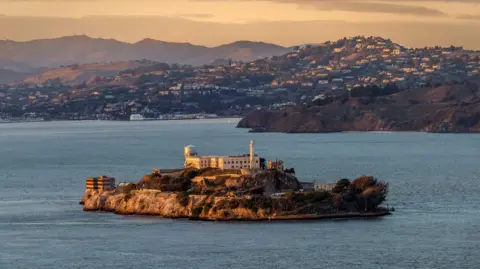
Former U.S. President Donald Trump has put forth a budget proposal for the 2027 fiscal year requesting $152 million to reopen the notorious Alcatraz prison, aiming to transform the historic San Francisco Bay landmark from a popular tourist attraction back into a modern, secure federal penitentiary.
The Reopening Proposal
The budget request specifies that the $152 million would cover the initial year of costs required "to rebuild Alcatraz as a state-of-the-art secure prison facility." The island, famously known as "The Rock" and located near San Francisco's Golden Gate Bridge, ceased operations as a maximum-security prison in 1963 due to its prohibitive operating expenses and has since been managed by the National Park Service as a historical site.
Trump initially announced his intention to reopen a "substantially enlarged and rebuilt ALCATRAZ" on Truth Social last year, stating it would be used to "house America's most ruthless and violent offenders." The current funding request is part of a larger $1.7 billion investment plan for the Bureau of Prisons.
Political Opposition and Concerns
The proposal has been met with significant skepticism and strong opposition from California politicians. Former Speaker of the U.S. House of Representatives, Nancy Pelosi, labeled the budget request "absurd on its face and should be rejected outright."
Pelosi further stated that "Rebuilding Alcatraz into a modern prison is a stupid notion that would be nothing more than a waste of taxpayer dollars and an insult to the intelligence of the American people." Other San Francisco politicians have echoed concerns that converting Alcatraz back into a functioning prison would result in the loss of an iconic landmark that currently generates approximately $60 million (£45m) in revenue annually as a tourist destination.
Operational Challenges and Historical Costs
Critics of Trump's plan have highlighted the significant logistical and financial hurdles associated with operating a prison on Alcatraz Island. The site notably lacks running water and a sewage system, requiring all essential supplies to be transported by boat.
According to the U.S. Bureau of Prisons, by the time Alcatraz closed in 1963, its operational costs were three times higher than any other federal prison. These long-standing issues remain a primary point of contention for those opposing its reactivation.
Alcatraz's Storied Past
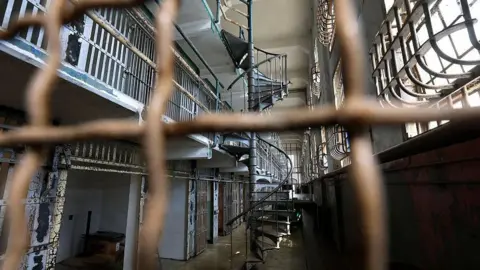
Alcatraz has a rich and dramatic history, having initially served as a naval defense fort before being converted into a military prison and subsequently a federal prison in the 1930s under the Department of Justice. It housed some of America's most infamous criminals, including Al Capone, Mickey Cohen, and George "Machine Gun" Kelly.
Beyond its correctional history, the island has cemented its place in popular culture, featuring as the setting for numerous films such as "Birdman of Alcatraz" (1962), "Escape from Alcatraz" (1979), and "The Rock" (1996).
Olley News Insight: The proposed resurrection of Alcatraz as an active prison presents a complex dilemma, balancing historical significance and current tourism revenue against the significant logistical and financial challenges that ultimately led to its initial closure decades ago. The debate underscores fundamental questions about resource allocation and the future of iconic national landmarks.
Key Takeaways
- Donald Trump is requesting $152 million to reopen Alcatraz as a "state-of-the-art secure prison facility."
- The funding is part of his proposed budget for the 2027 fiscal year and a broader $1.7 billion investment into the Bureau of Prisons.
- Alcatraz was closed in 1963 due to extremely high operating costs, being three times more expensive than other federal prisons.
- The island currently lacks running water and a sewage system, and all supplies must be brought in by boat.
- Prominent California politicians, including Nancy Pelosi, have called the plan "absurd" and a "waste of taxpayer dollars."
- Alcatraz currently operates as a successful tourist attraction, generating approximately $60 million (£45m) in annual revenue.


0 Comments