
Harrowing Search Underway in Iran for Missing US Aircrew Member
A US F-15 fighter aircraft was reportedly downed over Iranian territory, leading to a perilous search operation for a second crew member after one pilot was successfully rescued. The mission, classified as Combat Search and Rescue (CSAR), is described as "harrowing and massively dangerous" due to the hostile environment.
Intense Search Operations Continue
The search for the second crew member is currently underway deep inside Iran, according to CBS, a US partner of the BBC. This comes after initial reports indicated the successful rescue of the F-15 pilot, marking a potentially long history of US combat search-and-rescue missions.
Combat Search and Rescue (CSAR) missions are recognized as some of the most complex and time-sensitive operations undertaken by US and allied militaries. Elite units of the US Air Force are specifically trained for these high-stakes missions, often deployed preemptively near potential conflict zones.
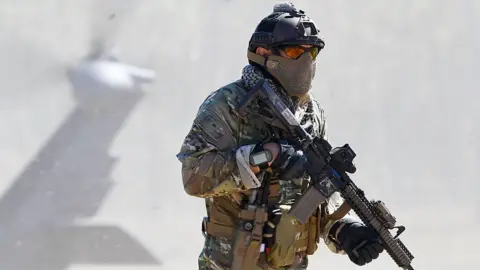
Understanding Combat Search and Rescue (CSAR)
CSAR operations are military efforts focused on locating, assisting, and potentially extracting personnel, such as downed pilots or isolated troops, from hostile or contested environments. Unlike conventional search-and-rescue efforts, CSAR missions inherently involve significant enemy threats.
These missions typically involve helicopters, supported by refuelling aircraft and other military jets for patrols and potential strikes. A former pararescue jumpers squadron commander told CBS News that such an operation could involve at least 24 pararescue jumpers, prepared to jump from planes if necessary, prioritizing contact, medical aid, and evasion of enemy forces. Verified video footage from Friday reportedly showed US military helicopters and a refuelling aircraft operating over Iran's Khuzestan province.
High Stakes in Hostile Territory
The urgency of CSAR missions is amplified by the likelihood of enemy forces concurrently deploying to locate the same personnel. Iranian officials have reportedly urged citizens to find the missing US crew member alive, offering rewards for their capture, according to state media.
Laurel Rapp, director of the US and North America programme at Chatham House, emphasized to BBC Radio 4's Today programme that capturing the crew member would be a "huge prize" for Iran, providing a "very powerful bargaining chip." Jonathan Hackett, a former US Marine Corps Special Operations specialist, added on the BBC's World Tonight programme that rescue teams prioritize signs of life, working backward from the last known location in difficult terrain, potentially involving "non-standard assisted recovery mission" contingency plans with indigenous groups.
A Legacy of Valor: History of CSAR
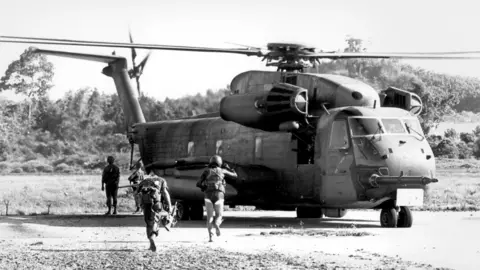
The concept of airborne wartime rescue missions dates back to World War One. The US military's pararescue units trace their origins to a 1943 mission in Burma, where combat surgeons parachuted to aid wounded soldiers. The world's first helicopter rescue in combat occurred a year later, saving four soldiers behind Japanese lines.
Formal search-and-rescue units were established post-WWII, but modern CSAR truly evolved during the Vietnam War. Missions like "Bat 21", which saw multiple casualties and aircraft losses during a pilot recovery, significantly refined the tactics and procedures that form the foundation of today's rescue operations.
Elite Pararescue Teams: The 'Swiss Army Knives' of the Air Force
While all US military branches possess some CSAR capabilities, the US Air Force bears primary responsibility, largely executed by its pararescue jumpers (PJs). These elite personnel, part of the broader special-operations community, operate under the motto "These Things We Do, That Others May Live," upholding a commitment that no service member will be left behind.
PJs undergo one of the most rigorous selection and training pipelines in the US military, taking approximately two years. Their comprehensive training includes parachute and dive qualifications, basic underwater demolition, survival, resistance, and escape (SERE) training, and a full civilian paramedic course, alongside specialized battlefield medicine and complex recovery operations. Combat Rescue Officers lead these teams, responsible for mission planning and execution.
Notable Rescue Missions in Recent Decades
Pararescue teams played a crucial role throughout the wars in Iraq and Afghanistan, conducting thousands of missions for wounded or isolated US and allied troops. A significant operation in 2005 involved recovering a wounded US Navy Seal in Afghanistan, an incident later adapted into the film "Lone Survivor."
While such missions have become rarer, previous high-profile successes include the recovery of an F-117 stealth fighter pilot shot down over Serbia in 1999, and the joint Air Force and Marine Corps CSAR mission in 1995 that rescued US pilot Scott O'Grady after he evaded capture for six days in Bosnia.
Key Takeaways
- A US F-15 fighter aircraft was reportedly downed over Iran, with one pilot rescued and a dangerous search ongoing for a second crew member.
- The mission is a Combat Search and Rescue (CSAR) operation, characterized by its extreme complexity, time-sensitivity, and hostile environment.
- US Air Force pararescue units, highly trained in combat and medical skills, are at the forefront of these perilous recovery efforts.
- Iranian officials are offering rewards for the capture of the missing crew member, considering them a significant bargaining chip.
- CSAR missions are time-critical, as enemy forces also actively seek to locate the downed personnel.
The ongoing search for the missing US crew member highlights the extreme risks faced by elite military rescue teams operating in contested territories, underscoring the critical importance of personnel recovery doctrine in modern military operations.


0 Comments