
US Pilot Rescued After F-15 Downed Over Iran; Search Continues for Second Crew Member
A US F-15 fighter aircraft was reportedly downed over Iran five hours ago, leading to the successful rescue of its pilot. A complex combat search-and-rescue operation is now underway deep within Iranian territory for a second crew member, highlighting the high-stakes nature of these elite military missions.
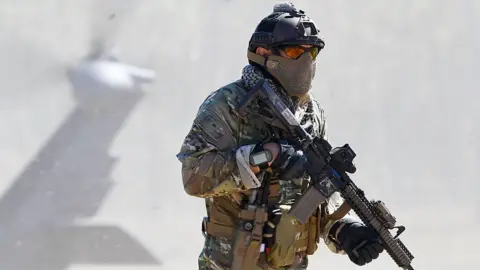
F-15 Pilot Recovered, Search Underway for Second Crew Member
Early reports, corroborated by CBS, indicate that the pilot of a US F-15 fighter jet downed over Iran has been successfully rescued. This operation marks the latest in a long tradition of US combat search-and-rescue (CSAR) missions. However, the search continues for a second crew member deep inside Iran.
Unverified video footage circulating on Friday appeared to show US military helicopters, accompanied by at least one refuelling aircraft, operating over Iran's Khuzestan province, consistent with such a rescue effort.
Understanding Combat Search and Rescue (CSAR)
Combat Search and Rescue (CSAR) missions are highly specialized military operations designed to locate, assist, and extract personnel in hostile or contested environments, often behind enemy lines. Unlike conventional search-and-rescue, CSAR takes place under active threat.
These missions are inherently time-sensitive, as enemy forces also race to locate downed personnel. Elite US Air Force units, specifically trained for CSAR, are frequently pre-positioned near conflict zones.
Olley News Insight: CSAR operations are among the most dangerous and intricate missions undertaken by modern militaries, requiring unparalleled skill, coordination, and resilience from specialized teams operating under extreme pressure.
The Role of Pararescue Teams
A former pararescue jumpers squadron commander told CBS News that an operation like the reported one in Iran would involve at least 24 pararescue jumpers (PJs) utilizing Black Hawk helicopters. These teams are prepared to jump from aircraft if necessary, with their immediate priority being to establish contact with the missing crew member.
Once located, PJs provide immediate medical aid, evade enemy forces, and facilitate extraction. These highly trained individuals, often referred to as the "Swiss Army knives of the Air Force," undergo an arduous two-year training pipeline encompassing combat, medical, and survival skills.
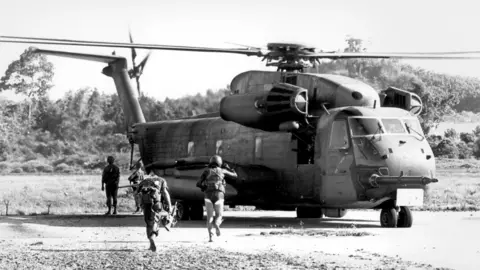
A Legacy of High-Stakes Rescues
The history of airborne wartime rescue missions dates back to World War One. The US military's pararescue units trace their origins to a 1943 mission in Burma, with the first helicopter combat rescue occurring in 1944. Modern CSAR tactics were significantly refined during the Vietnam War, an era that saw a vast expansion in the scope and complexity of these operations.
Jonathan Hackett, a former US Marine Corps Special Operations specialist, explained to the BBC's World Tonight programme that rescue teams prioritize signs of life, working backward from the last known location. He noted that such an incident could involve a "non-standard assisted recovery mission," potentially leveraging indigenous groups for contingency plans.
Notable Recent CSAR Operations
While missions to recover downed US pilots have become less frequent in recent decades, their impact remains significant. In 1999, pararescuemen recovered the pilot of an F-117 stealth fighter shot down over Serbia. A highly publicized 1995 mission in Bosnia saw US pilot Scott O'Grady rescued after evading capture for six days.
Pararescue teams also played a crucial role in the wars in Iraq and Afghanistan, conducting thousands of missions to rescue wounded or isolated US and allied troops. A 2005 operation to recover a wounded US Navy Seal, later depicted in the film "Lone Survivor," exemplifies their commitment to the motto: "These Things We Do, That Others May Live."
Key Takeaways
- A US F-15 fighter pilot was successfully rescued after being downed over Iran.
- A combat search-and-rescue (CSAR) operation is actively searching for a second crew member.
- CSAR missions are complex, time-sensitive military operations conducted in hostile environments.
- US Air Force pararescue teams are elite units highly trained in combat, medical aid, and survival.
- The US military has a long history of high-stakes rescue missions, with modern tactics evolving since the Vietnam War.


0 Comments