
Former Iranian Foreign Minister Proposes Comprehensive Peace Plan Amid Escalating US-Israeli War on Iran
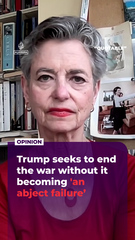
Mohammad Javad Zarif, Iran's former Foreign Minister, has unveiled a detailed roadmap aimed at de-escalating the ongoing United States-Israeli war on Iran. Published by Foreign Affairs magazine on Friday, Zarif's proposal outlines a path to peace that extends "beyond a temporary ceasefire" as tensions continue to mount across the Middle East.
The Middle East Gripped by Escalation
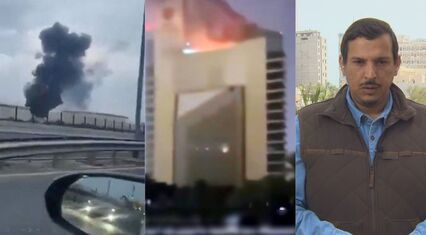
The conflict, which erupted on February 28 with US-Israeli strikes on Iran, has rapidly spread throughout the Middle East, causing significant disruption to the global economy. Tehran has retaliated by attacking its neighbours, asserting these actions target US assets, and has severely restricted vessel movement in the strategically vital Strait of Hormuz.
Regional hostilities showed no signs of abating on Sunday, following US President Donald Trump's ultimatum giving Iran 48 hours to agree to a deal or face "all hell."
Zarif's Vision for a Lasting Peace
Against this backdrop of intense conflict, Zarif's roadmap acknowledges that while Iran may view its actions as successful, a prolonged conflict would only lead to further civilian casualties and infrastructural destruction. He asserts that although continuing the fight might be "psychologically satisfying" for Tehran, true victory lies in establishing lasting peace and offering a "well-timed off-ramp" to President Trump.
Key Components of the Proposal
Zarif's plan calls for Iran to offer significant concessions, including placing limits on its nuclear program under international monitoring and agreeing to reopen the Strait of Hormuz. In return, he demands an end to all international sanctions imposed on Iran.
Specific nuclear limits would entail a commitment to never develop nuclear weapons and to blend down its entire stockpile of enriched uranium, ensuring enrichment levels fall below 3.67 percent. Current International Atomic Energy Agency (IAEA) estimates suggest Iran holds approximately 440kg (970lb) of uranium enriched to 60 percent, a level dangerously close to weapons-grade purity. Zarif dismissed President Trump's demand for zero enrichment as "fanciful" thinking.
Furthermore, the former minister advocates for a mutual non-aggression pact between Iran and the United States, where both nations pledge against future strikes. He also insists on the termination of all existing US and United Nations Security Council resolutions against Iran.
Regional and International Cooperation Outlined
Zarif's proposal extends to potential roles for regional and international actors. He suggests a joint fuel-enrichment consortium involving China, Russia, the US, Iran, and its Gulf neighbours. This consortium would operate at West Asia's sole enrichment facility, with Iran transferring all enriched material and equipment there.
Additionally, Zarif proposes the formation of a regional security framework comprising Gulf states, UN Security Council powers, and potentially Egypt, Pakistan, and Turkiye. This framework would be dedicated to ensuring non-aggression, fostering cooperation, and guaranteeing freedom of navigation, particularly through the Strait of Hormuz, a crucial waterway through which one-fifth of the world's crude oil and natural gas supplies typically pass.
To solidify peace further, Zarif suggests that Iran and the United States should initiate mutually beneficial trade, economic, and technological cooperation.
Mixed Reactions from Gulf States
Zarif's proposal has drawn varied responses from Gulf officials, with some criticising it for overlooking Tehran's aggressive actions against its neighbours.
Anwar Gargash, the diplomatic adviser to the president of the United Arab Emirates, responded on X, stating that Zarif's article "ignores one of the core flaws in Iran's strategy: aggression against its Gulf Arab neighbors." He added, "Thousands of missiles & drones targeting infrastructure, civilians, even mediators, is not strength; it is hubris & strategic failure. The Arab world has seen this before: destruction peddled as victory."
Former Qatari Prime Minister Hamad bin Jassim Al Thani also weighed in on X, agreeing with "much of it" and acknowledging its "clever" approach. However, he cautioned that the war had led to a "more complicated and dangerous" path, chiding Iran for its attacks. Al Thani noted, "You may believe that you have achieved progress in some aspects, and perhaps temporary tactical gains, but the cost was clear: the loss of an important part of your friends in the region, and the erosion of the trust that was built over years." He concluded by calling for a voice like Zarif's to emerge from within Iran to propose solutions.
Olley News Insight: The timing of former Foreign Minister Zarif's proposal, amidst escalating regional conflict and direct ultimatums from the US, highlights a potential internal divergence within Iran or a calculated diplomatic maneuver. While offering a comprehensive off-ramp, its success hinges on bridging significant trust deficits and addressing the grievances of regional powers directly impacted by Tehran's recent actions.
Key Takeaways
- Former Iranian Foreign Minister Mohammad Javad Zarif has proposed a comprehensive roadmap in Foreign Affairs magazine to end the US-Israeli war on Iran.
- The plan includes Iran limiting its nuclear program under international monitoring and reopening the Strait of Hormuz.
- In exchange, Zarif demands an end to all international sanctions and UN Security Council resolutions against Iran, and a mutual non-aggression pact with the US.
- The proposal also suggests regional and international cooperation for fuel enrichment and a new security framework for the Gulf.
- The war, which began on February 28, has intensified with Iranian attacks on Gulf neighbours and a US ultimatum for a deal.
- Regional reactions are mixed, with UAE and Qatar acknowledging aspects of the plan while criticising Iran's aggression against its neighbours.


0 Comments