
Olley News Investigates: The Optimal Method for Crispy Bacon with Minimal Mess
For many, bacon is a culinary delight, but achieving that perfect crispiness often comes with the unwelcome aftermath of greasy stovetops and extensive cleanup. Recent culinary trials have put traditional cooking methods head-to-head with modern appliances, revealing surprising insights into how we might be preparing this breakfast favorite all wrong.

The Frying Pan: A Classic Method with Common Drawbacks
The stovetop frying pan remains a popular choice for cooking bacon, a method familiar to many. While straightforward, it consistently results in significant grease splatter, often making cleanup arduous. Bacon cooked this way also tends to curl, potentially affecting presentation, and typically requires draining on paper towels to remove excess grease.
A standard 10-inch frying pan can accommodate approximately 7-8 strips of bacon, limiting its efficiency for larger servings. Cleaning a grease-laden pan without the aid of a dishwasher presents an additional, less-than-desirable task.

Oven Baking: Ideal for Quantity, Still Challenges Cleanup
Baking bacon in the oven offers a distinct advantage in capacity, easily handling 10-12 strips on a standard baking tray. This method also allows for crisper, less greasy results when cooked on a rack, as fat drains away from the meat. It's a convenient option for preparing larger quantities without constant supervision.
However, oven baking introduces its own cleanup hurdles. Baking trays and racks can be cumbersome to wash by hand due to their size and the accumulated grease. While aluminum foil can line trays, grease often penetrates or bypasses it, requiring considerable effort to clean.
The Air Fryer: The Unexpected Champion of Crispiness and Cleanliness
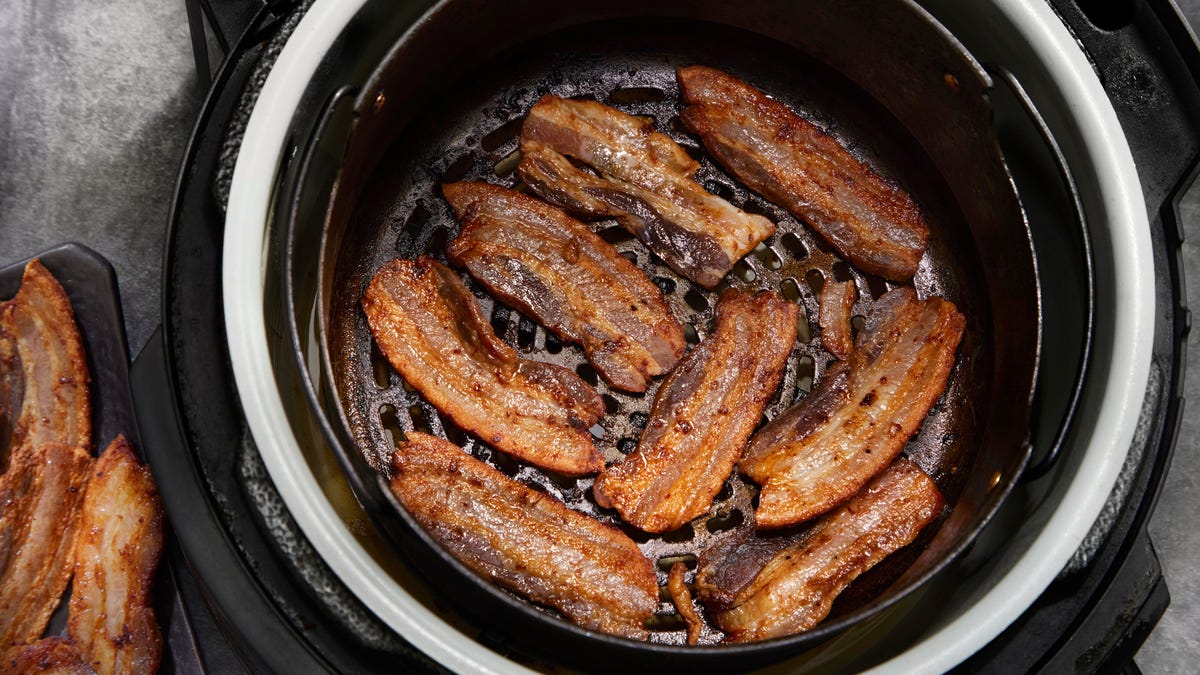
The air fryer emerges as the standout method, delivering perfectly crispy bacon in approximately 7 minutes, significantly faster than both stovetop and oven techniques. The circulating hot air ensures even cooking and crisp texture while allowing excess grease to drip into the collection vessel below, eliminating splatters and the need for post-cook draining.
Beyond speed and superior results, the air fryer offers unparalleled ease of cleaning. Its compact cooking chamber fits comfortably in a sink for quick washing, and many models feature dishwasher-safe components. The main limitation is capacity; a typical 4-quart air fryer can only cook about 6-7 strips at a time, necessitating batches for larger groups.
Key Takeaways
- Air Fryer: Fastest cooking (7 mins), lowest hassle, perfectly crispy results, easiest cleanup. Limited capacity (6-7 strips).
- Oven: Good for large batches (10-12 strips), produces crispier, less greasy bacon than stovetop, but involves longer cooking (18 mins) and more challenging cleanup.
- Frying Pan: Quickest traditional method (10 mins), but messy due to grease splatter, bacon tends to curl, and cleanup is laborious for individual pans. Limited capacity (7-8 strips).
Olley News observes that the rising popularity of kitchen gadgets like air fryers extends beyond niche cooking. Their efficiency in everyday tasks, such as preparing breakfast staples, highlights a broader trend towards appliances that simplify household chores and offer superior results, making them a worthwhile investment for local families.


0 Comments