Beijing Seeks Peacemaker Role in Middle East as Conflict Deepens
As the Middle East war enters its second month, impacting global energy supplies and causing oil prices to soar, China is intensifying efforts to act as a mediator. This initiative comes amidst heightened tensions, with US President Donald Trump indicating potential US military action in Iran could conclude within "two to three weeks."
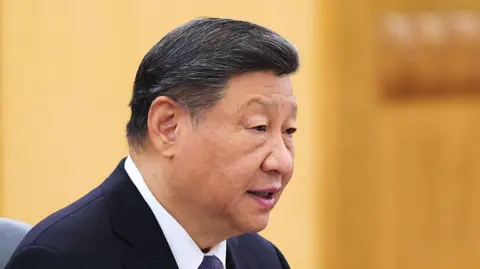
China's Mediation Efforts Begin
China has joined Pakistan in presenting a five-point peace plan, aiming to secure a ceasefire and reopen the vital Strait of Hormuz. This unexpected collaboration sees Pakistan, a former US ally, gaining traction as a mediator with President Trump. Beijing's involvement, however, positions it as a rival to Washington, ahead of crucial trade talks between President Xi Jinping and Donald Trump next month. Zhu Yongbiao, a Middle East expert from Lanzhou University, highlighted the significant backing provided by China, stating, "Morally, politically and diplomatically, China is providing comprehensive support with the hope that Pakistan can play a more distinctive role." This marks a notable shift for Beijing, whose official response to the conflict had previously been muted.
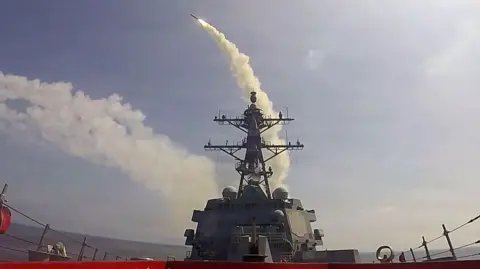
Conflict Deepens: US and Israel Strikes
Conflict across the Middle East continues to rage after the US and Israel launched wide-ranging strikes on Iran on February 28. The escalating situation underscores the urgency of mediation efforts, particularly concerning the free flow of goods and energy through critical waterways.
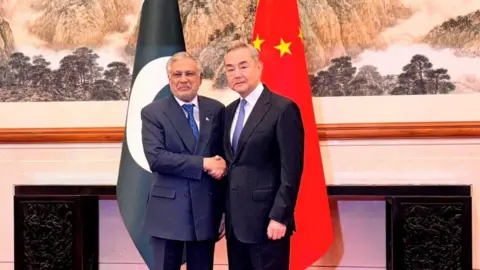
Pakistan's Pivotal Role
The peace plan emerged following Pakistan's foreign minister's visit to Beijing to seek Chinese support for negotiation efforts. China's Foreign Ministry confirmed the two nations were making "new efforts towards advocating for peace," agreeing that dialogue and diplomacy were the "only viable option to resolve conflicts" and calling for the protection of waterways, including the blockaded Strait of Hormuz. This collaborative approach demonstrates a concerted push to de-escalate the conflict, even though responses from the US and Iran to the proposed plan are still pending.
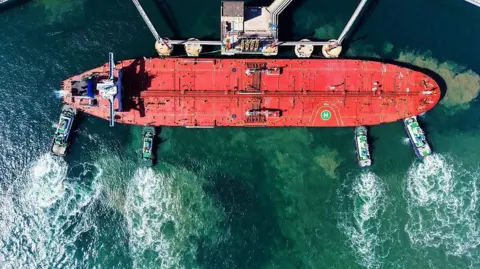
Economic Stability: China's Driving Force
While oil prices are a concern, China, the world's largest crude oil importer, possesses sufficient stockpiles for several months. Beijing's primary motivation for stepping in as a peacemaker appears to be its deep desire for global economic stability. A stable global economy is crucial for China, heavily reliant on exports to revive its ailing domestic economy. Matt Pottinger, Chairman of the Foundation for Defense of Democracy's China Program, notes, "If the rest of the world begins to slow down economically because of an energy shock, that's going to be tough for China's factories and exporters." The potential long-term impact on China's industrial heartland, the "factory of the world," from higher oil prices affecting supply chains for plastics, fabrics, and electronics, is a significant worry for Beijing.
Expanding Influence Through Economic Ties
The US trade war during Trump's first term prompted Chinese businesses to seek new international markets, leading to significant growth in exports to the Middle East. Last year, China's exports to the region grew nearly twice as fast as to other markets. The Middle East has become China's fastest-growing market for electric cars, and China is the largest investor in the region's desalination projects. This robust economic engagement has allowed China to cultivate relationships with both US allies like Saudi Arabia and adversaries such as Iran, with whom Beijing has a decades-long partnership as Iran's leading trade partner and primary oil buyer.
Past Mediation Attempts and Limitations
China has previously played a mediating role in the Middle East, with mixed success. In 2023, it brokered a deal that saw Saudi Arabia and Iran re-establish diplomatic relations after years of severed ties. A year later, Beijing hosted leaders of 14 Palestinian factions, leading to a declaration of intent for a national unity government. These instances underscored China's potential influence and its interest in regional stability. However, China's partnerships generally lack security guarantees or military backing, as its priority remains economic development. Its military presence in the region is limited, with its only base in Djibouti focused on logistics rather than power projection. This approach was evident during the Israel-Iran war in 2025, when China offered minimal support, highlighting the limitations of its role as a security partner.
Olley News Insight: China's current diplomatic push in the Middle East reflects a calculated strategy to leverage its economic power and project an image of global statesmanship, while carefully avoiding direct military entanglement. This approach contrasts sharply with traditional Western interventionism and aligns with Beijing's 'economic development first' foreign policy doctrine.
Key Takeaways
- China and Pakistan have proposed a five-point plan for a Middle East ceasefire and the reopening of the Strait of Hormuz.
- Beijing's motivation is primarily economic, seeking global stability to bolster its export-dependent economy.
- China has cultivated strong economic ties across the Middle East, granting it leverage with both US allies and adversaries.
- Past Chinese mediation efforts include brokering a Saudi-Iran rapprochement and hosting Palestinian unity talks.
- China's influence is limited by its cautious approach to military involvement and the absence of security guarantees for partners.
- The initiative allows President Xi Jinping to project China as a neutral, pragmatic peacemaker, contrasting with the US.


0 Comments