
Trump's NATO Strait of Hormuz Remarks Ignite Allied Discord Amid Escalating Gulf Crisis
US President Donald Trump's recent suggestion that failing to secure the Strait of Hormuz would be detrimental to NATO's future has met with significant pushback from Washington's allies, highlighting deep divisions over the alliance's role and the ongoing crisis in the Gulf.
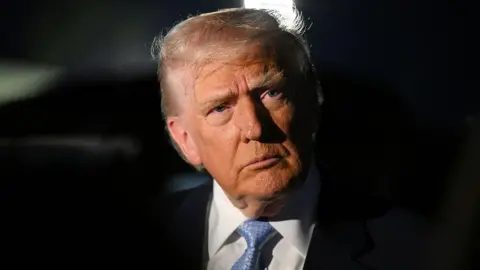
Trump Challenges NATO's Core Purpose
Known for his critical stance on NATO allies, President Trump's latest remarks regarding the Strait of Hormuz imply a purpose for the alliance that has raised considerable concern. Gen Sir Nick Carter, former chief of the Defence Staff, clarified on Monday that "Nato was created as a… defensive alliance," not for members to be obliged to follow a "war of choice."
The irony of Trump's comments is not lost on observers, coming just months after his assertive claims to Greenland, a sovereign territory and fellow NATO member. Responses from allies have been direct; a German government spokesman stated that the conflict with Iran "has nothing to do with Nato," while Defence Minister Boris Pistorius questioned the expected impact of European navies against the powerful US fleet, adding, "This is not our war. We have not started it."
Escalating Crisis in the Gulf
Despite the diplomatic friction, there is an undeniable and urgent need to address the crisis in the Gulf. Iran's effective blockage of the Strait of Hormuz, a critical global shipping lane, has left Western governments seeking immediate solutions. While the crisis may have been triggered by Trump's decision to pursue conflict, its swift resolution is paramount to prevent further damage to the global economy.
UK Prime Minister Sir Keir Starmer confirmed ongoing discussions with US, European, and Gulf partners to devise a "viable plan," though he noted that decisions are "not at the point of decisions yet."
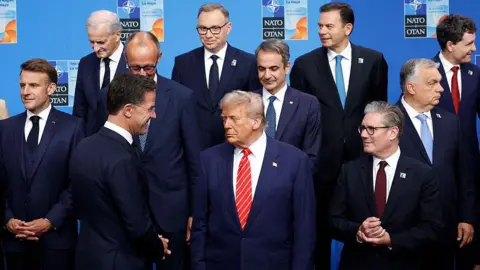
Mine Countermeasures and Naval Capabilities Under Scrutiny
The Prime Minister highlighted the presence of autonomous mine-hunting systems in the region. With HMS Middleton, a British mine countermeasures vessel, undergoing maintenance, the Royal Navy is reportedly offering newly developed seaborne drones for mine detection and neutralisation.
However, the global neglect of minesweeping capabilities presents a significant challenge. Tom Sharpe, a former Royal Navy commander, noted that the new British technologies remain untested in combat. Gen Carter recalled the 1991 Gulf War de-mining operation took 51 days, lamenting that "No navy has invested in this at the scale that they should have done, least of all the Americans." The US Navy is also phasing out its specialised Avenger-class minesweepers, replacing them with unmanned systems on Independence-class littoral combat ships.
Broader Iranian Threats and Reluctant Allies
Beyond naval mines, Iran's Revolutionary Guard possesses a diverse arsenal including armed fast boats, naval "suicide" drones, and shore-based missiles, as evidenced by recent Fars News Agency images of stored armaments. President Trump has even suggested that securing the Strait, which he called a "very small endeavour," might involve attacks on the Iranian coastline to "knock out some bad actors."
Such aggressive postures make many of Washington's allies hesitant to commit, particularly if it involves ground operations. The UK government, like many, has called for de-escalation as the most effective path to unblocking the Strait of Hormuz, an outcome that American and Israeli officials suggest could still be weeks away.
European Hesitation on Escort Operations
The prospect of allies sending ships to escort merchant vessels through the Strait has been largely met with reluctance. Germany's Pistorius flatly stated, "Germany will not participate with its military in securing the Strait of Hormuz." Similarly, EU foreign policy chief Kaja Kallas confirmed a "clear wish" for extended EU naval operations but noted that ministers declined to expand the existing Red Sea mission, reaffirming, "This is not Europe's war."
France's President Emmanuel Macron expressed some willingness to form a coalition for escort operations but only after the "hottest phase" of the conflict, with his Defence Minister Catherine Vautrin indicating no immediate plans for deployment. Experts like Tom Sharpe warn that a potential escort operation in Hormuz would be far more complex than current operations, facing air, surface, and underwater threats simultaneously.
The Unresolved Plan for British Deployment
As allies navigate their trepidation, inaction remains an unsustainable option. Sir Keir Starmer emphasised the need for "as many partners as possible" in any solution, while also stressing that British military personnel deserve critical reassurances, including a clear legal basis and a "proper thought through plan" before deployment on a potentially dangerous mission. As of now, such a comprehensive plan remains elusive.
Olley News Insight: The escalating Gulf crisis is exposing fundamental disagreements within NATO regarding its mission scope and the extent of allied obligation in conflicts not directly threatening their borders. The reluctance of European powers to commit military resources underscores a strategic divergence from US policy, with implications for global maritime security and the alliance's future cohesion.
Key Takeaways
- US President Trump's call for NATO involvement in securing the Strait of Hormuz has been largely rejected by allies, who view it as outside the alliance's defensive mandate.
- Germany and other European nations have explicitly stated they will not commit military assets to a US-led operation in the Strait.
- The crisis highlights a global deficit in mine-countermeasures capabilities, with many navies, including the US, having deprioritised this area.
- Iran's varied naval threats, including fast boats, drones, and missiles, complicate any potential escort or clearance operation.
- UK Prime Minister Sir Keir Starmer seeks a "viable plan" with multiple partners, emphasising the need for a legal basis and a clear strategy before British deployment.
- Despite the urgency, a comprehensive, allied plan for de-escalation or securing the Strait of Hormuz does not yet exist.


0 Comments