
Three Lebanese Journalists Killed in Israeli Strike Amid Regional Escalation
Three Lebanese journalists were tragically killed in a targeted Israeli strike in southern Lebanon on Saturday, their employers have confirmed. The incident has drawn strong condemnation and raised further concerns about the safety of media personnel in the volatile region.
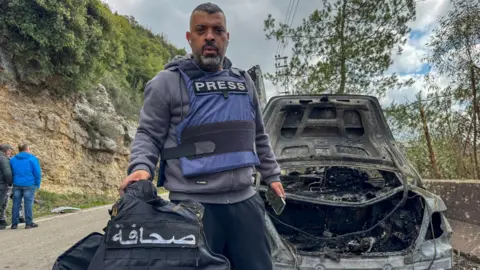
Details of the Strike
The deadly strike reportedly occurred just before noon local time (10:00 GMT) in the town of Jezzine, hitting the journalists' vehicle. Those killed were identified as Ali Shoeib, a reporter for the Hezbollah-affiliated Al Manar TV, and Fatima Ftouni and Mohamed Ftouni, a reporter and cameraman respectively for the channel Al Mayadeen.
IDF's Statement and Accusations
The Israel Defense Forces (IDF) confirmed the death of Ali Shoeib, describing him as a "terrorist" from Iranian-backed Hezbollah's elite Radwan Force. The IDF alleged that Shoeib had "operated for years under the guise of a journalist" to "expose the locations of IDF soldiers operating in southern Lebanon and along the border," and to "disseminate Hezbollah propaganda materials." The IDF did not provide comment regarding the deaths of Fatima or Mohamed Ftouni.
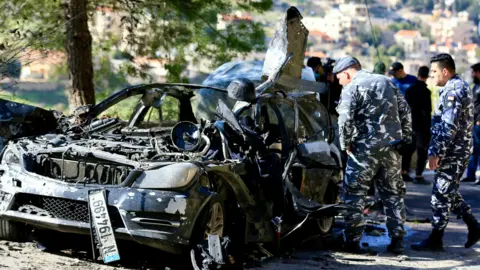
Lebanese Outcry and International Law
Lebanese President Joseph Aoun condemned the strike as a "brazen crime," asserting that it violated the "most basic rules" of international law by targeting reporters, who are civilians fulfilling a professional duty. Prime Minister Nawaf Salam echoed this sentiment on X, calling the attack a "flagrant violation of international humanitarian law and a clear breach of the rules that guarantee the protection of journalists in times of war."
Broader Conflict Context
This incident marks the second time Israel has been accused of targeting journalists in Lebanon since the US-Israel conflict against Iran began a month ago. Previously, on March 18, Al Manar reported the killing of its presenter Mohammad Sherri and his wife in an Israeli strike in Beirut.
The ongoing hostilities have led to significant civilian casualties in Lebanon, with the Ministry of Health reporting over 1,100 civilian deaths, including 120 children and 42 paramedics. Over a million people have also been displaced, worsening the country's humanitarian situation. Concerns persist that Israel is employing tactics similar to those it has been accused of using in Gaza, including the targeting of civilians, journalists, and paramedics—allegations Israel denies.
A ceasefire between Israel and Hezbollah, agreed upon in November 2024, saw only partial implementation, with Israel maintaining military posts and continuing to strike what it identified as Hezbollah targets. The recent escalation followed the killing of Iran's supreme leader, after which Hezbollah fired rockets into northern Israel, prompting further Israeli operations to protect its northern communities.
Key Takeaways
- Three Lebanese journalists—Ali Shoeib, Fatima Ftouni, and Mohamed Ftouni—were killed in an Israeli strike in southern Lebanon on Saturday.
- The Israel Defense Forces (IDF) confirmed Shoeib's death, alleging he was a Hezbollah "terrorist" operating as a journalist, but did not comment on the other two victims.
- Lebanese President Joseph Aoun and Prime Minister Nawaf Salam have condemned the strike as a violation of international law and protections afforded to journalists.
- This is the second accusation of Israel targeting journalists in Lebanon since recent hostilities intensified.
- The conflict has caused over 1,100 civilian deaths and displaced more than a million people in Lebanon.
Olley News Insight: The escalating conflict in the region continues to pose significant risks for media professionals. Incidents involving the deaths of journalists underscore the urgent need for adherence to international humanitarian law, which strictly protects non-combatants, including those reporting from conflict zones. Such events not only tragically impact individuals but also threaten the global public's access to vital information.


0 Comments