
Caster Semenya Labels IOC's Reinstated Gender Verification "Disrespect for Women"
Two-time Olympic 800-metres champion Caster Semenya has strongly criticised the International Olympic Committee's (IOC) decision to reinstate gender verification tests for the 2028 Los Angeles Games, calling it "a disrespect for women." The hyperandrogenic athlete expressed particular disappointment that the measure was introduced under the leadership of new IOC President Kirsty Coventry, herself a woman from Africa.
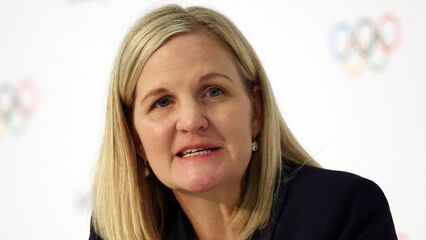
IOC Mandates "Biological Females" for Women's Events
The IOC announced on Thursday that only "biological females" would be permitted to compete in women's events, effectively preventing transgender women from participating. This new policy represents a significant shift from previous guidelines, establishing a universal rule across all Olympic sports.
Eligibility will now be determined by a one-time SRY gene screening, conducted via saliva, cheek swab, or blood sample. IOC President Kirsty Coventry justified the policy, stating, "At the Olympic Games, even the smallest margins can be the difference between victory and defeat, so it is absolutely clear that it would not be fair for biological males to compete in the female category. In addition, in some sports it would simply not be safe."
Semenya Expresses Disappointment and Harm
Speaking in Cape Town, Semenya stated, "For me personally, for her being a woman coming from Africa, knowing how African women or women in the Global South are affected by that, of course it causes harm." She highlighted the impact on women globally, particularly those from the Global South.
Semenya also likened the new measure to a past failure, recalling the abandonment of chromosomal sex testing from 1968 to 1999 due to scientific questioning and athlete commission pressure. "It came as a failure, and that's why it was dropped," she said. "It's like now we need to prove that we are worthy as women to take part in sports. That's a disrespect for women."
A History of Legal Battles
Caster Semenya has become a prominent symbol in the fight for hyperandrogenic athletes' rights since her first 800m world title in 2009. Her career has been marked by continuous legal challenges against track and field's sex eligibility rules, extending from athletic tracks to courtrooms.
In 2025, Semenya secured a partial victory at the European Court of Human Rights, which ruled that she had not received a fair hearing in her previous appeals against decisions by the Court of Arbitration for Sport, which had sided with World Athletics. Despite this, the ruling did not overturn World Athletics' regulations that effectively ended her career in the 800m event.
IOC Policy Aligns with US Political Stance
The IOC's new policy also removes a potential point of contention with the United States ahead of the 2028 Los Angeles Olympics. US President Donald Trump, who returned to office in January 2025, issued an executive order banning transgender athletes from women's sports.
Trump subsequently took credit for the IOC's decision, posting on his Truth Social network, "Congratulations to the International Olympic Committee on their decision to ban Men from Women's Sports. This is only happening because of my powerful Executive Order, standing up for Women and Girls!"
Lessons from the 2024 Paris Olympics Gender Row
The IOC's decision comes after a contentious gender dispute at the 2024 Paris Olympics involving Algerian boxer Imane Khelif and Taiwan's Lin Yu-ting. Both athletes had been excluded from the International Boxing Association's 2023 world championships for failing eligibility tests, yet the IOC allowed them to compete in Paris, citing a "sudden and arbitrary decision by the IBA." Both boxers went on to win gold medals.
Olley News Insight: The reinstatement of gender verification tests by the IOC underscores the ongoing and complex global debate surrounding fairness, inclusion, and biological advantage in women's sports. This decision is likely to reignite discussions on athlete rights and the scientific understanding of sex in sports.
Key Takeaways
- Caster Semenya, a two-time Olympic champion, strongly criticizes the IOC's decision to reinstate gender verification tests for the 2028 Los Angeles Games.
- Semenya calls the move "a disrespect for women" and expresses disappointment in IOC President Kirsty Coventry for its implementation.
- The new IOC policy will only permit "biological females," determined by a one-time SRY gene screening, to compete in women's events.
- The IOC had previously abandoned chromosomal sex testing in 1999 due to scientific and athlete pressure, which Semenya cited as a past failure.
- The policy aligns with US President Donald Trump's executive order banning transgender athletes from women's sports, with Trump claiming credit for the IOC's decision.
- The 2024 Paris Olympics saw a gender row involving boxers Imane Khelif and Lin Yu-ting, who were cleared by the IOC to compete despite prior exclusions by the IBA.


0 Comments