
Oil Nears $110 a Barrel Amid Reports of Gas Field Strike and Escalating Regional Tensions
Global oil prices surged close to $110 a barrel today following reports from Iranian media detailing an airstrike on a facility within the world's largest natural gas field. The incident has intensified geopolitical concerns and introduced renewed volatility into international energy markets.
Energy Prices React to Strike Reports
The Brent crude oil benchmark reached $109.91 a barrel just after 14:30 GMT, marking an increase of over 5% from Tuesday's closing prices before receding slightly. The UK's benchmark gas price also experienced a significant jump, rising 6% to 143.53p a therm, though it later fell back below the 140p threshold.
Despite these surges, current prices remain below the peak highs recorded earlier in the ongoing conflict, with oil reaching $116.78 a barrel on March 9 and UK gas hitting 162.55p a therm on March 3.
Alleged Airstrike and Iranian Warnings
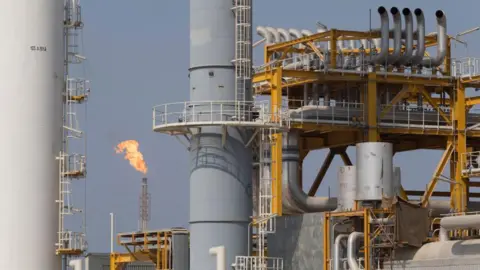
The price spikes followed initial reports from Iranian media indicating that a petrochemical complex on the South Pars gas field had been hit. Several hours later, Qatar confirmed "extensive damage" at its Ras Laffan industrial site, following earlier threats from Iran.
Iran's oil ministry, as reported by Tasnim news agency, stated that a fire at the petrochemical complex was brought under control. However, Iran's military issued a stern warning, vowing "decisive action" in response to any attacks on its energy infrastructure.
"As previously warned, if the fuel, energy, gas, and economic infrastructures of our country are attacked by the American-Zionist enemy, in addition to a powerful counterattack against the enemy, we will severely strike the origin of that aggression as well," the military declared in a statement published by Tasnim. It added that targeting the energy infrastructure of "countries of origin" would be considered legitimate retaliation.
Qatar Confirms Damage, Halts Production
Qatar, which shares the vast gas field (known as North Dome on its side) and is a significant global producer of liquefied natural gas, had already suspended production earlier this month due to escalating regional tensions.
Qatar's foreign ministry spokesman, Majed Al Ansari, condemned the strikes against energy infrastructure, labeling them a "threat to global energy security." The Qatari interior minister reported responding to a fire in the Ras Laffan area attributed to "Iranian targeting," later confirming extensive damage but no injuries.
Olley News Insight
The South Pars/North Dome gas field, shared by Iran and Qatar, is the world's largest natural gas field. Any disruption to its operations has significant implications for global energy supplies, particularly for liquefied natural gas (LNG) markets, and can exacerbate existing geopolitical tensions in the Middle East.
Market Volatility Expected
Danni Hewson, head of financial analysis at AJ Bell, commented that the attack and subsequent Iranian retaliation had "helped dial up the temperature once again and put renewed upward pressure on oil prices."
Hewson added that until there is progress regarding the potential blockage of the Strait of Hormuz, "energy markets will likely remain volatile," highlighting the critical role of the strategic choke point in global oil transit.
US Responds with Jones Act Waiver
In response to the rising oil prices, the White House announced a 60-day suspension of the Jones Act, a 1920 law mandating that only American-made ships transport goods between US ports. US Press Secretary Karoline Leavitt stated this waiver aims to allow "vital resources like oil, natural gas, fertiliser, and coal to flow freely" using non-American vessels.
However, US maritime groups have downplayed the potential impact, suggesting that oil prices rather than shipping costs are the primary driver behind rising fuel prices for consumers.
Iran Halts Gas Flow to Iraq
Separately, Iran has suspended its gas supply to Iraq, according to a senior Iraqi official who spoke to Reuters. This move is intended to bolster domestic supplies, as data from the Gas Exporting Countries Forum indicates that 94% of Iran's gas production is consumed internally.
Key Takeaways
- Global oil prices neared $110 a barrel following reports of an airstrike on a major gas field facility.
- Brent crude jumped over 5%, and UK gas prices rose 6%, though both remain below previous highs.
- Iranian media reported a strike on a petrochemical complex on the South Pars field; Qatar confirmed "extensive damage" at its Ras Laffan site.
- Iran's military vowed "decisive action" and threatened retaliation against energy infrastructure in "countries of origin."
- Analysts predict continued volatility in energy markets, citing geopolitical tensions and the Strait of Hormuz.
- The US temporarily waived the Jones Act to facilitate energy flow, while Iran suspended gas supplies to Iraq to meet domestic demand.


0 Comments