
NASA's Giant Artemis II Moon Rocket Rolls Out for Crucial Second Attempt Ahead of Historic Lunar Mission
NASA's colossal Artemis II Moon rocket has begun its second deliberate journey to the launch pad, marking a pivotal step toward sending astronauts around the Moon – a feat not attempted in over five decades. This follows repairs to a helium system issue that delayed its initial launch attempt in March, with engineers now confident the problem is resolved.
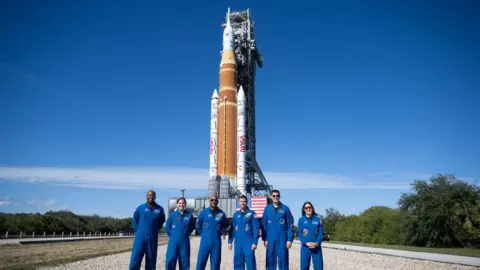
The Second Rollout: A Giant's Deliberate Journey to Pad 39B
In a spectacle that unfolded just after nightfall, the 98-meter-tall Space Launch System (SLS) and its Orion spacecraft emerged from the iconic Vehicle Assembly Building (VAB) at Kennedy Space Center in Florida. The immense stack is now undertaking a four-mile, 12-hour crawl to Pad 39B, preparing for a potential early-April launch window.
Standing nearly 100 meters tall and weighing approximately 5,000 tonnes with its launch platform, the rocket is transported by the venerable Crawler-Transporter-2. This tank-like vehicle, built by NASA in 1965, moves at a snail's pace of about 1 mph (1.6 km/h). This intentional slowness minimizes stress on the multi-billion-dollar hardware and allows flight teams to monitor for any critical movements.
Addressing Previous Setbacks: The Helium System Fix
The current rollout comes after NASA was forced to abandon a planned March launch window. A fault was detected in the rocket's helium system during a fueling test, which is crucial for pressurizing propellant tanks. Rather than attempting a complex repair on the pad, managers opted to return the SLS to the VAB for full access and investigation.
Inside the VAB, engineers worked meticulously, raising platforms around the upper stage to access the problem area. They replaced suspect components and swapped batteries in several critical systems. Subsequent tests have confirmed that the fault has been cleared, and confidence is high that the issue is resolved.
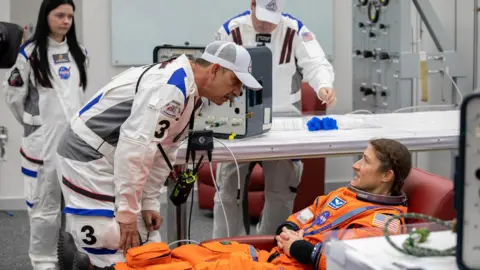
Pre-Launch Preparations and Crew Readiness
Upon reaching Pad 39B, engineers will conduct several days of intensive checks to verify the repairs and ensure nothing shifted during the slow journey. This includes re-connecting the launch tower, running pressure tests on the helium system, and conducting rehearsals of the countdown sequence without actually fueling the tanks.
Meanwhile, the Artemis II crew – Commander Reid Wiseman, Pilot Victor Glover, Mission Specialist Christina Koch, and Canadian Space Agency astronaut Jeremy Hansen – has entered pre-flight quarantine. They are expected to arrive in Florida closer to launch to participate in final rehearsals, including suiting up and practicing their journey to the pad.
Olley News Insight: The Artemis II mission is more than just a trip around the Moon; it represents humanity's return to deep space exploration with a crew, laying essential groundwork for future lunar outposts and eventual missions to Mars. Its success is vital for the broader ambitions of the Artemis program.
Targeting the Lunar Launch Window
NASA is currently targeting the first launch opportunity for Artemis II on April 1st at 18:24 Eastern Daylight Time (23:24 in the UK). Should this window be missed, subsequent opportunities are available on April 2nd, 3rd, 4th, 5th, and 6th, with a final April opportunity on the 30th. The mission will last ten days, looping around the far side of the Moon before returning to Earth.
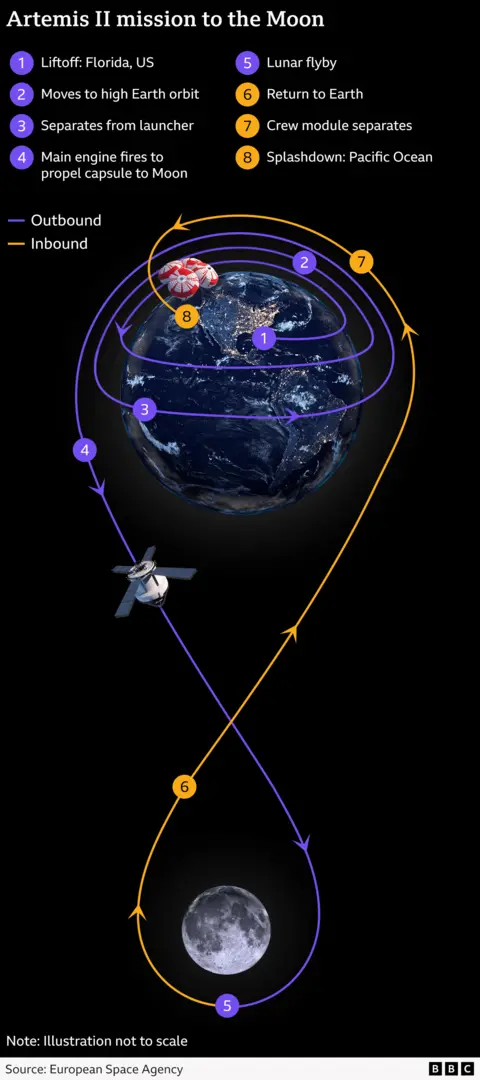
Paving the Way for Future Lunar Exploration
Artemis II is designated as the first crewed mission of the Artemis program, following the uncrewed Artemis I test flight. Its success is critical for paving the way for future lunar endeavors. This includes Artemis III, a crewed test flight in Earth orbit scheduled for 2027, and Artemis IV, planned for 2028, which aims to see astronauts set foot on the Moon once more.
Key Takeaways
- NASA's Artemis II Moon rocket has begun its second rollout to Pad 39B at Kennedy Space Center.
- The 98-meter-tall SLS and Orion spacecraft are traveling four miles from the VAB.
- The move follows repairs to a helium system issue that forced the abandonment of a March launch attempt.
- Engineers are confident the helium system fault has been cleared after repairs in the VAB.
- Post-rollout tests and crew rehearsals are underway, targeting an early April launch window.
- The mission will send a four-person crew around the Moon, a first in over 50 years.
- Artemis II is a crucial precursor to future crewed lunar landings planned for Artemis IV in 2028.


0 Comments