
Philippines Declares National Energy Emergency as Oil Crisis Deepens
Philippine President Ferdinand Marcos has placed the nation under a state of national energy emergency, citing the ongoing war in Iran and its severe impact on global oil markets. The declaration, made late Tuesday, empowers the government to implement measures aimed at stabilizing energy supply and mitigating economic fallout as local fuel prices have more than doubled since late February.
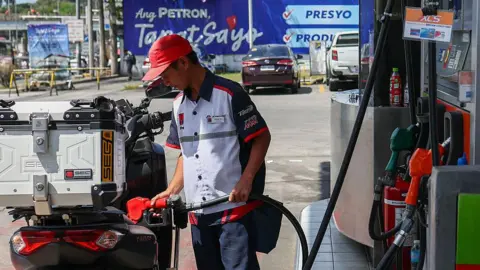
President Marcos Outlines Strategic Response
In a televised address, President Marcos assured Filipinos that his administration is actively working to secure new oil sources. The government plans to procure one million barrels of oil to bolster the existing supply, which currently stands at 45 days. Marcos emphasized the goal is to establish a continuous "flow of oil-related products" rather than single deliveries.
The Philippines, which imports 98% of its oil from the Gulf region, is the first country to declare such an emergency in response to the conflict. The US-Israel war with Iran and the effective closure of the Strait of Hormuz, a critical shipping route, have caused significant disruptions and price surges in global energy markets.
Expanded Government Powers and Diplomatic Efforts
The emergency declaration grants the government legal authority to enforce measures protecting energy stability and the broader economy. President Marcos stated that "nothing is off the table" in terms of potential solutions and ideas.
Philippine Ambassador to the US, Jose Manuel Romualdez, indicated that Manila is engaging with Washington to secure exemptions, potentially allowing the country to import oil from US-sanctioned nations. This move highlights the close alliance between the Philippines and the United States in the Pacific region.
Oversight and Supply Management
Under the presidential order, a dedicated committee has been established to oversee the orderly distribution of essential goods, including fuel, food, and medicines. The government has also been authorized to directly purchase fuel and petroleum products to fortify national reserves. The declaration is set to remain in effect for one year, unless modified or revoked by the President.
This action follows strong calls from several senators who urged President Marcos to address the "emergency-level" hardship faced by families due to the soaring oil prices, which saw petrol and diesel prices more than double on Tuesday alone compared to pre-war levels in February.
Mixed Reactions to Emergency Declaration
The emergency declaration has drawn criticism from certain quarters. The Kilusang Mayo Uno (KMU), a prominent labor coalition, condemned the move as an "admission" of the government's failure to adequately address the oil crisis. The KMU also accused the administration of previously downplaying the situation with misleading claims that "everything is normal."
Furthermore, the KMU expressed serious concerns regarding what it terms "anti-worker provisions" within the executive order. These provisions, which could restrict activities deemed disruptive to economic stability, including strikes, are seen as potentially limiting workers' ability to protest during a period when fuel prices significantly impact incomes.
Olley News Insight: For an import-reliant nation like the Philippines, a national energy emergency underscores the direct and immediate economic vulnerability to global geopolitical events. Such declarations often balance the need for swift governmental action with potential impacts on civil liberties and labor rights.
Business Leaders Support, Transport Workers Plan Strike
In contrast, business tycoon Manuel V. Pangilinan, who chairs major utilities companies, has voiced support for the emergency powers. Pangilinan acknowledged that his companies are feeling the pressure of rising energy costs, warning that the crisis is beginning to affect business operations. He affirmed that the government "should have every option" available to navigate the economy through this challenging period.
Meanwhile, transport workers and other groups, including ride-hailing services, are planning a two-day strike for Thursday and Friday. This action reflects widespread anger over escalating fuel costs and perceived inadequate government response. The transport union coalition Piston, leading the strike, has outlined demands including scrapping fuel taxes, rolling back oil prices, abandoning deregulation, and implementing state controls, alongside calls for fare increases and higher wages.
Current Energy Outlook and Mitigation Measures
Energy Secretary Sharon Garin stated earlier on Tuesday that the country possesses approximately 45 days of fuel supply. Garin also indicated that the Philippines would "temporarily" increase its reliance on coal-fired power plants to meet energy demands, a strategic shift prompted by the surging costs of liquefied natural gas (LNG).
Since the onset of hostilities in the Middle East, the government has implemented several measures, including subsidies for transport drivers, reductions in ferry services, and a four-day work week for civil servants to conserve fuel.
Key Takeaways
- President Ferdinand Marcos declared a national energy emergency in the Philippines due to the Iran war.
- The declaration empowers the government to stabilize energy supply and mitigate economic impacts.
- The Philippines aims to procure one million barrels of oil to supplement its current 45-day reserve.
- Local petrol and diesel prices have more than doubled since February 28.
- The government is exploring exemptions with the US to import oil from sanctioned countries.
- A committee will oversee the distribution of essential goods, and the government can directly purchase fuel.
- The declaration is in effect for one year.
- Labor groups, like KMU, criticize the declaration, citing "anti-worker provisions" and government's earlier downplaying of the crisis.
- Business leaders, like Manuel V. Pangilinan, support the emergency powers.
- Transport workers are planning a two-day strike, demanding fuel tax cuts and state controls.
- The Philippines will temporarily rely more on coal-fired power plants due to high LNG costs.


0 Comments