
Iran Appoints Veteran IRGC Commander Mohammad Bagher Zolghadr to Lead National Security Amid Rising Tensions
Tehran, Iran – Mohammad Bagher Zolghadr, a seasoned former commander of the Islamic Revolutionary Guard Corps (IRGC), has been named the new head of Iran's Supreme National Security Council (SNSC). His appointment comes at a critical juncture for the Islamic Republic, as it grapples with intense external pressures stemming from the ongoing US-Israel conflict with Iran and significant internal unrest.
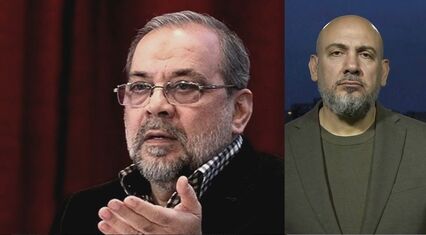
The New Security Chief: Mohammad Bagher Zolghadr
Zolghadr was officially appointed on Tuesday, succeeding Ali Larijani, who was tragically killed in an air strike last week. The Supreme National Security Council oversees Iran's highest security and foreign policy decisions, making this one of the most sensitive and influential positions within the country's political framework.
Tasked with navigating a complex and volatile security landscape, Zolghadr faces immediate challenges from military pressures related to the US-Israel war on Iran, alongside persistent domestic security concerns.
A Career Forged in the IRGC
Described by Al Jazeera correspondent Sohaib Alassa as a "heavyweight security figure," Zolghadr brings extensive military and security credentials to his new role. He is a prominent member of the first generation of the IRGC, formed in the aftermath of the 1979 Islamic Revolution, and notably participated in the Iran-Iraq war.
His distinguished career includes serving as chief of the IRGC joint staff for eight years and as the organization's deputy commander-in-chief for another eight. More recently, he held the position of secretary of the advisory Expediency Council since 2023, following a transition into high-level political and judicial roles.
Strategic Appointment Amidst Volatility
Zolghadr's selection is seen as a strategic move to fill the significant void left by Ali Larijani, who was widely regarded as a deeply experienced political and security figure. Analysts suggest that the appointment reflects Tehran's need for a robust and capable leader to manage its complex security apparatus.
Olley News Insight: Zolghadr's deep military roots and long history within the IRGC suggest a strengthening of hardline influence within Iran's national security establishment. His selection indicates a preference for a strong, experienced hand in guiding the nation through its current geopolitical and domestic challenges, particularly as the SNSC leadership is closely linked to the office of Supreme Leader Mojtaba Khamenei.
This appointment is not viewed as an immediate, reactive measure to the current conflict, but rather the culmination of a deliberate process to identify a figure possessing the specific blend of security expertise and strategic management capabilities required for such a critical position.
Navigating Internal and External Pressures
Zolghadr's tenure begins with several immediate tests. The country continues to experience air strikes, not only in major urban centers like Tehran and Isfahan but also with a specific focus on western and northwestern regions, notably East Azerbaijan province. These attacks have fueled concerns about internal destabilization.
Domestically, Iranian authorities have responded by arresting hundreds accused of collaborating with foreign entities, part of a broader effort to pre-empt security breaches following a major protest movement earlier this year that resulted in thousands of fatalities. Externally, Tehran maintains its regional pressure campaign, including missile attacks aimed at demonstrating reach into Israeli territory and restrictions on shipping in the Strait of Hormuz, which has impacted the global economy and oil prices.
Implications for Future Negotiations
Beyond internal security and regional posturing, Zolghadr is expected to play a pivotal role in any future negotiations with the United States aimed at de-escalating the ongoing conflict. His military background and strategic position could significantly influence the direction and terms of such talks.
According to Al Jazeera's Ali Hashem, reporting from Tehran, "Zolghadr's appointment suggests Iran's leadership is trying to add more military layers to the national security establishment." Hashem further noted the weight of Zolghadr's position, stating, "An important thing to note is that whoever is sitting at the negotiation table will have to get Zolghadr's approval before anything passes."
Key Takeaways
- Mohammad Bagher Zolghadr has been appointed as the new head of Iran's Supreme National Security Council (SNSC).
- He succeeds Ali Larijani, who was killed in an air strike last week.
- Zolghadr is a veteran former IRGC commander with extensive military and security experience.
- His appointment reflects a strategic choice to manage complex external military pressures and internal security challenges.
- He is expected to play a crucial role in any future negotiations with the United States.


0 Comments