
Iranian Missile Strikes Injure Over 160 in Southern Israel, Challenge Air Defences
More than 160 people have been injured, some seriously, following Iranian ballistic missile strikes on the southern Israeli towns of Arad and Dimona on Saturday evening. The attacks, which saw missiles breach Israel's sophisticated air defence system, occurred near a sensitive nuclear research facility, though initial reports indicate no damage to the site.
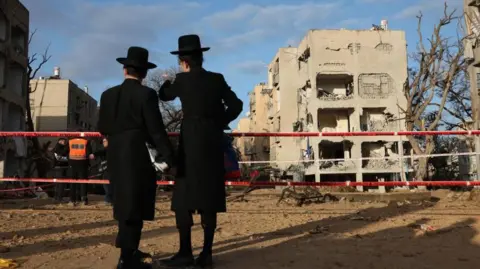
Missile Strikes Hit Arad and Dimona, Over 160 Injured
Israeli emergency officials report that 84 individuals are currently receiving treatment in Arad, and another 78 in Dimona, after the ballistic missiles made direct hits on Saturday evening. Several of those injured are described as being in serious condition, including a 10-year-old boy in Dimona.
The International Atomic Energy Agency (IAEA) has stated it is not aware of any damage to the Shimon Peres Negev Nuclear Research Center, colloquially known as the "Dimona reactor," located approximately 13km (eight miles) outside Dimona.
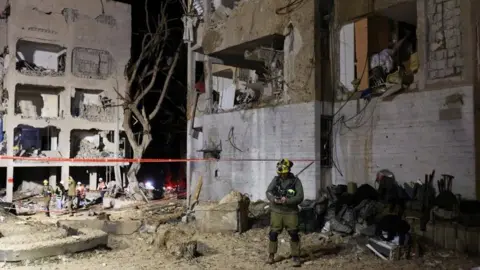
Extensive Damage Reported in Impact Zones
In Arad, local residents described the blasts as "terrifying." The missile caused significant damage, leaving a deep crater and gouging out the outside walls of two residential apartment buildings. Emergency medical technician Yakir Talkar characterized the scene in Arad as "very severe," noting "many wounded with varying degrees of injury."
Similar damage and casualties were reported in the nearby town of Dimona following a parallel missile strike. Crowds of dark-suited men, identified as Ultra-Orthodox Jewish residents, were seen observing the devastation in Arad, a town in the Negev desert.
Air Defence Breach Raises Concerns
Israeli firefighters confirmed that interceptors launched in both Dimona and Arad "failed to hit the threats," resulting in two direct hits by ballistic missiles carrying warheads weighing hundreds of kilograms. Urgent investigations are underway to determine how the Iranian missiles successfully breached Israel's sophisticated air defence system.
The incident highlights that despite advanced protection, the system is not infallible. Historically, such attacks have tended to strengthen public resolve rather than weaken it, a sentiment echoed after a 12-day war last summer.
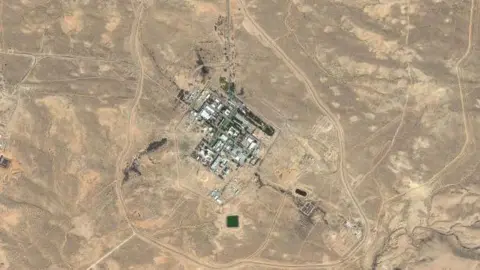
Nuclear Facility and Retaliation Claims
The Shimon Peres Negev Nuclear Research Center, located in the Negev desert, has long been widely understood to house Israel's undeclared arsenal of nuclear weapons. Officially, Israel maintains ambiguity over its nuclear capabilities. The targeting of an area in close proximity to this site is viewed with utmost gravity by Israeli authorities.
Iranian state TV previously claimed these strikes were in response to an attack on Iran's Natanz nuclear facility on Saturday. The IAEA reported "no increase in off-site radiation levels" or "leakage of radioactive materials" at Natanz, and stated there was "no danger to residents of the surrounding areas." Natanz has been targeted multiple times, including in the first days of the war that began on February 28, and during last June's 12-day conflict.
Key Takeaways
- More than 160 people were injured in Iranian missile strikes on Arad and Dimona, southern Israel.
- Missiles breached Israel's air defence system, causing significant damage to residential buildings.
- The attacks occurred near the Shimon Peres Negev Nuclear Research Center, but the IAEA reports no damage to the facility.
- Iran claims the strikes were retaliation for an attack on its Natanz nuclear facility.
- Investigations are ongoing into the failure of Israel's missile interceptors.
The recent missile strikes underscore the escalating regional tensions and the persistent vulnerability of even highly-defended territories in the face of advanced ballistic missile technology. This event could significantly influence ongoing strategic discussions regarding regional security.


0 Comments