
Industrial Sites Struck Across Gulf as Regional Conflict Intensifies
A wave of coordinated attacks has targeted major industrial infrastructure across Gulf nations, marking a significant escalation as the broader regional conflict involving Iran, the US, and Israel enters its fifth week. The assaults have resulted in casualties and substantial damage, raising concerns about economic stability and humanitarian impact.
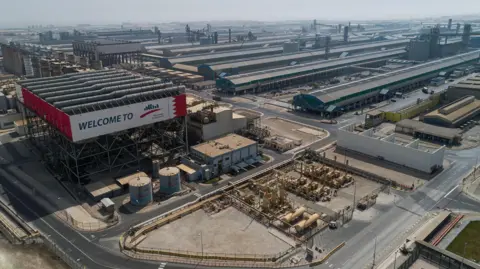
Attacks on Vital Industrial Facilities
The United Arab Emirates (UAE) reported multiple injuries and significant damage following an Iranian strike on a key aluminium plant in Abu Dhabi, operated by Emirates Global Aluminium. Concurrently, state-controlled Aluminium Bahrain confirmed that two employees were wounded in an Iranian assault on its facility, one of the world's largest aluminium smelters.
Houthis Join the Conflict, Threatening Red Sea Shipping
Yemen's Iran-backed Houthi movement officially entered the conflict over the weekend, launching a barrage of missiles towards "sensitive" military sites in Israel and vowing further attacks. Israeli defense forces reported shooting down two missiles originating from Yemen. This development raises serious fears of economic disruption, particularly if the Houthis extend their targeting to shipping lanes in the crucial Red Sea, as they have done in previous conflicts.
Economic Ripple Effects Deepen
The conflict has already sent global oil and gas prices soaring, primarily due to Iran's effective closure of the Strait of Hormuz, a critical conduit for global energy supplies. The prospect of Houthi attacks on Red Sea shipping further threatens to exacerbate these price increases, potentially bringing another vital waterway to a standstill and impacting global markets.
Broadening Scope of Hostilities Across the Region
Beyond the direct industrial strikes, other regional nations have reported incidents. Oman is investigating drone attacks on its southern port of Salalah, which reportedly injured a foreign worker, though no group has claimed responsibility. Kuwait's defense ministry confirmed significant damage to its international airport's radar system following an attack by 15 drones.
Meanwhile, Tehran accused Israel of striking two of its steel production operations. Iran's Islamic Revolutionary Guard Corps (IRGC) issued threats of retaliation against US and Israeli targets, specifically stating that Israeli and American universities in the Middle East would be considered legitimate targets if two Iranian universities were hit. Concurrently, Israel continued its strikes in Iran and Lebanon, where multiple journalists and paramedics were reported killed in separate incidents. The Israel Defense Forces (IDF) confirmed the death of Ali Shoeib, a journalist for Hezbollah-affiliated Al Manar TV, labeling him a "terrorist" without providing supporting evidence for a military role.
Olley News Insight: The current escalation underscores the complex web of interconnected conflicts in the Middle East. While specific attacks are attributed, the involvement of various state and non-state actors, often operating through proxies, blurs the lines of direct engagement. The targeting of economic infrastructure and shipping routes highlights a strategy aimed at maximizing regional and global impact beyond traditional military objectives, significantly affecting energy markets and global trade.
Key Takeaways
- Major aluminium production facilities in the UAE and Bahrain were targeted in Iranian strikes, causing injuries and significant damage.
- Yemen's Iran-backed Houthis have entered the conflict, launching missiles at Israel and raising concerns over potential attacks on Red Sea shipping.
- Oil and gas prices have surged due to disruptions in the Strait of Hormuz and fears of further shipping route closures.
- Additional incidents include drone attacks in Oman and Kuwait, Iranian accusations against Israel, and Israeli strikes in Iran and Lebanon, resulting in civilian casualties.
- Iran's IRGC has threatened to target US and Israeli universities in the Middle East in retaliation for attacks on its own academic institutions.


0 Comments