
DR Congo and Rwanda Agree to De-escalate Tensions After US-Hosted Talks
The Democratic Republic of Congo (DR Congo) and Rwanda have committed to taking "concrete steps" to ease escalating tensions, following crucial talks hosted by the United States in Washington. This agreement comes amidst a stalled peace process and persistent conflict in eastern DR Congo, which has continued despite a previous US-brokered peace deal.
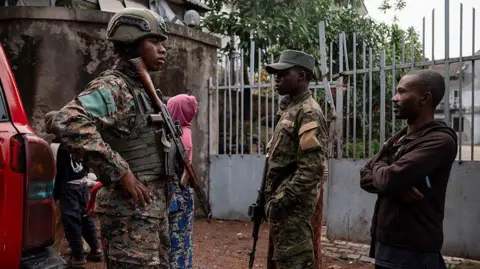
M23 rebels continue to control significant areas in eastern DR Congo. (Image: AFP via Getty Images)
New Diplomatic Push Yields Agreement
A joint statement issued by DR Congo, Rwanda, and the United States outlined a series of coordinated measures designed to de-escalate tensions and foster progress on the ground.
Key pledges include mutual respect for sovereignty and territorial integrity. Rwanda has agreed to disengage its forces and lift "defensive measures" in specified areas within DR Congo's territory, while DR Congo will intensify time-bound efforts to neutralize the Democratic Forces for the Liberation of Rwanda (FDLR).
US Accusations and Rwandan Denials
The recent diplomatic efforts follow a period of heightened international pressure. Earlier this month, the US sanctioned the Rwandan Defence Forces and four senior officials, accusing Rwanda of directly supporting the M23 rebel group and escalating the conflict in eastern DR Congo.
Rwanda has consistently denied supporting M23, despite overwhelming evidence presented by various international bodies. Kigali describes its military presence as a defensive measure against threats from armed groups in eastern DR Congo, particularly the FDLR, which it labels a "genocidal militia" due to its links to the 1994 Rwandan genocide.
Persistent Conflict Despite Previous Peace Efforts
Fighting has continued unabated in eastern DR Congo, undermining a US-brokered peace deal signed previously. Weeks after that agreement, M23 rebels entered the Congolese city of Uvira, near the Burundi border, marking a significant escalation.
Although M23 later withdrew from Uvira under US pressure, the group retains control over substantial parts of eastern DR Congo, including key cities like Goma and Bukavu. The US has warned that M23's continued presence and Rwandan military support pose a significant risk of escalating the conflict into a broader regional war.
Rwanda's Counter-Claims
In response to the US sanctions and accusations, Rwanda rejected the claims, asserting that the measures unfairly targeted one side and distorted the facts of the conflict. Rwanda also accused DR Congo of violating the peace agreement through "indiscriminate drone attacks and ground offensives."
The protracted conflict in eastern DR Congo is rooted in complex historical dynamics, including the aftermath of the Rwandan genocide and disputes over natural resources. The involvement of numerous armed groups and alleged external support has continuously destabilized the region, impacting millions of civilians and creating one of the world's most severe humanitarian crises. International diplomatic efforts frequently seek to address the immediate escalations, but long-term peace requires comprehensive solutions to underlying issues.
Key Takeaways
- DR Congo and Rwanda have agreed to "concrete steps" for de-escalation following US-hosted talks in Washington.
- The agreement includes mutual respect for sovereignty, Rwandan troop disengagement, and DR Congo's efforts to neutralize the FDLR.
- The US recently sanctioned Rwanda, accusing it of backing the M23 rebel group, which Rwanda denies.
- Despite a previous peace deal, M23 rebels still control large areas of eastern DR Congo, raising fears of a broader regional conflict.
- Rwanda has accused DR Congo of violating the peace agreement with military offensives.


0 Comments