
US-Israeli Strikes Rock Iran Amid Diplomatic Contradictions
United States-Israeli forces have launched a series of attacks across multiple Iranian cities, signaling a lack of de-escalation despite US President Donald Trump's recent claims of ongoing talks with Tehran to end the conflict.
Escalation Hits Key Iranian Cities
Huge explosions were reported overnight on Tuesday in the Iranian capital, Tehran, with attacks also targeting the cities of Tabriz, Isfahan, and Karaj. Iranian media indicated that Israeli-US strikes hit two gas facilities and a pipeline, hours after President Trump had postponed planned attacks on power infrastructure.
The Fars news agency, Iran's sole news outlet to report the incident, stated, "As part of the ongoing attacks carried out by the Zionist and American enemy, the gas administration building and the gas pressure regulation station on Kaveh Street in Isfahan were targeted." These facilities in central Iran were "partially damaged." Fars also reported that a "projectile hit the area outside the Khorramshahr gas pipeline processing station," in the country's southwest, quoting the city's governor.
Mounting Civilian Toll and Targeted Killings
A leading scholar and professor at a science university in Tehran was killed alongside his two children in an attack on his residence north of the capital. Iran's English-language news channel Press TV identified the victim as Saeed Shamaghdari, who taught at the engineering department of the Iran University of Science and Technology. Israel has previously targeted Iranian academics accused of links to weapons development.
Jafar Miadfar, the head of Iran's emergency service, confirmed that 208 children have been killed since the war began on February 28. Among them, 168 were victims of US missile strikes on a girls' school in Minab city at the start of the conflict, an incident that rights groups insist should be investigated as a war crime. The Iranian government estimates that more than 1,500 civilians have been killed across the country so far.
Conflicting Diplomatic Signals
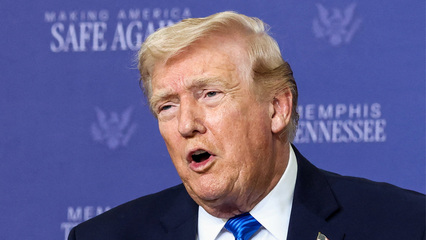
Despite the escalation, US President Donald Trump claimed on Tuesday that Washington was in talks with Tehran to end the war, stating "very good and productive conversations" had taken place. However, senior Iranian officials on Monday denied any such discussions.
Esmaeil Kowsari, a member of the Iranian parliament's national security and foreign policy committee and a major-general in the military, was quoted by Fars news agency as saying Iranian officials "need to think wisely" before entering talks with the US, adding, "This is not the first time they have lied about negotiations." Meanwhile, Iran's Foreign Minister Abass Araghchi has held calls with several countries, including Egypt, Pakistan, and Oman, in the last 24 hours.
The stark divergence between US and Iranian statements regarding peace talks highlights the deep mistrust governing relations, complicating any genuine de-escalation efforts amidst ongoing hostilities.
Widespread Regional Spillover
The US-Israel war on Iran has expanded across the Middle East, triggering a global energy crisis and a spike in oil prices. The Gulf region continues to face direct military spillover; Saudi Arabia's Ministry of Defense intercepted 19 drones launched in separate attacks targeting its Eastern Province, and Kuwait's army reported responding to "hostile missile and drone attacks," with alarms sounding repeatedly overnight.
Amazon reported that its Amazon Web Services region in Bahrain was "disrupted" on Monday. The death toll from a US air attack on the Iran-aligned Popular Mobilisation Forces (PMF) in Anbar, Iraq, has risen to 14, including the group's head, Saad Dawai. Concurrently, Iran has launched multiple strikes across Israel, with at least six people reportedly injured after missile shrapnel hit a building in Tel Aviv.
International Calls for Negotiation
Amidst the escalating conflict, European Commission President Ursula von der Leyen, while visiting Australia, underscored the critical need for a diplomatic solution. She stated, "It is of utmost importance that we come to a solution that is negotiated, and [that] this puts an end to the hostilities that we see in the Middle East."
Von der Leyen also warned that the situation was "critical" for energy supplies globally and condemned Iran's efforts to block energy exports through the Strait of Hormuz.
Key Takeaways
- Intensified US-Israeli strikes hit multiple Iranian cities, including Tehran, targeting gas facilities and infrastructure.
- President Trump claimed "productive conversations" with Iran, which Iranian officials vehemently denied, labeling them as deceptive.
- The conflict has resulted in significant civilian casualties, including a Tehran scholar and over 200 children, with calls for investigations into potential war crimes.
- The war's impact has spilled over across the Gulf region, involving Saudi Arabia, Kuwait, and Iraq, and has contributed to a global energy crisis.
- International bodies, including the European Commission, are urging a negotiated resolution to end hostilities and address critical energy supply concerns.


0 Comments