
Danish Election Deadlock: Frederiksen's Social Democrats Win Most Votes, Coalition Talks Loom
Denmark's Prime Minister Mette Frederiksen and her Social Democrats party have secured the most votes in the country's general election, but a failure to achieve a majority leaves the nation facing complex coalition negotiations. The outcome marks the party's weakest showing in over a century, despite finishing first.
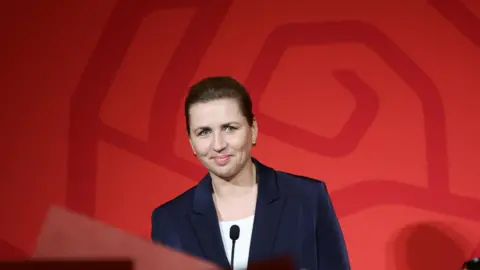
Social Democrats Lead But Fall Short of Majority
Taking 21.9% of the vote, the Social Democrats, who have been in power since 2019, emerged as the largest party with 38 parliamentary seats in Tuesday's election. However, this figure is insufficient to claim victory outright and govern alone.
Addressing supporters at Christiansborg, Prime Minister Frederiksen acknowledged the result, stating, "I'm sorry that we did not get more votes. I had also hoped for a better result." Despite this, she expressed pride that the Social Democrats remain "the Danes' absolute favourite political party."
A Fragmented Parliament and Looming Negotiations
The election has resulted in a closely contested parliament where neither the "red bloc" of left-wing parties nor the "blue bloc" on the right has secured the 90 seats required for a majority. The red bloc holds 84 seats, while the blue bloc has 77, leaving a clear path to government unclear.
With 12 different political parties on the ballot, Frederiksen has expressed her continued readiness to lead Denmark for a third term, but acknowledged that the path forward will involve tough negotiations. Such talks are a typical feature of Danish politics, often taking days or even weeks to conclude.
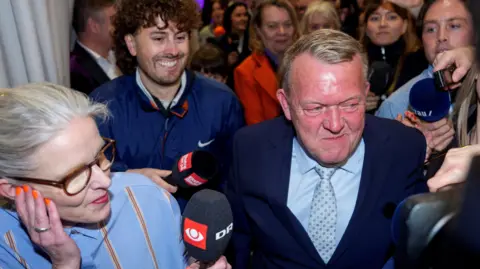
The Moderates Emerge as Kingmakers
All eyes are now on the Moderates, a small centrist party holding 14 seats, which has emerged as the crucial kingmaker. Led by former Prime Minister Lars Løkke Rasmussen, the Moderates hold the balance of power, with Rasmussen advocating for a government formed "across the centre."
Rasmussen, who recently gained attention for his role in the Greenland stand-off with the United States and a viral fist-bump with US Vice President JD Vance, reiterated his party's central position, stating, "We're standing in the middle. We're ready." This stance puts him at odds with Troels Lund Poulsen, leader of the blue bloc's largest party, the Liberals, who has firmly ruled out another coalition with the Social Democrats and urged Rasmussen to align with the right.
Campaign Focus Shifts to Domestic Concerns
The election was called months earlier than anticipated by Frederiksen, who had hoped her handling of former US President Donald Trump's demands to acquire Greenland would bolster her support. However, the campaign trail ultimately saw domestic issues dominate voter concerns.
Key issues included the rising cost of living, the state of the economy, and welfare concerns. Environmental factors such as high pesticide levels in drinking water due to pig farming and the climate footprint of agriculture also registered as significant concerns for the electorate, overshadowing geopolitical tensions.
Olley News Insight: Denmark's political system frequently relies on coalition governments, making the post-election negotiation phase critical. The Moderates' rise as a centrist force, coupled with Rasmussen's proven diplomatic flair, highlights a potential shift towards broader cross-bloc cooperation, or at least a prolonged period of complex power-brokering that could redefine the traditional red and blue bloc dynamics.
Key Takeaways
- Prime Minister Mette Frederiksen's Social Democrats won the most votes (21.9%), securing 38 seats, but fell short of a majority.
- Neither the left-wing "red bloc" (84 seats) nor the right-wing "blue bloc" (77 seats) achieved the 90 seats needed for a parliamentary majority.
- The centrist Moderates, with 14 seats, led by former Prime Minister Lars Løkke Rasmussen, are positioned as the critical "kingmakers."
- Complex coalition negotiations are expected to determine Denmark's next government, with Rasmussen favouring a cross-centre solution.
- Domestic issues like the cost of living, economy, and environmental concerns (pesticides, agriculture's climate footprint) were the primary focus of the campaign, rather than international affairs like the Greenland dispute.


0 Comments