
China Halves Planned Fuel Price Hikes to Ease Driver Burden Amid Global Energy Surge
Beijing has significantly scaled back its latest planned fuel price increases, halving the initially projected hikes on petrol and diesel. The move, announced by China's state planner, aims to "reduce the burden" on the nation's 300 million drivers amidst escalating global energy costs fueled by the ongoing Iran conflict.
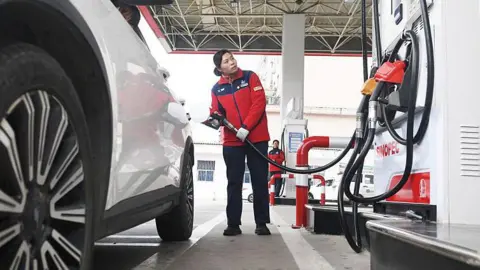
Beijing Acts to Stabilise Domestic Fuel Market
Initially, petrol and diesel prices were slated to increase by 2,205 yuan (£239; $320) and 2,120 yuan per tonne, respectively. However, government intervention has slashed these increases to 1,160 yuan for petrol and 1,115 yuan for diesel, effective Tuesday. This marks the fifth and largest price adjustment of the year for China, even with the reduction.
The National Development and Reform Commission (NDRC), responsible for reviewing and adjusting fuel prices based on global crude oil movements every 10 days, confirmed the regulatory measures. China's state planner stated these actions were taken "to mitigate the impact of abnormal increases in international oil prices, ease the burden on downstream users and ensure stable economic operations and public welfare."
Public Responds to Surging Costs
With local petrol prices jumping approximately 20% since the start of the Iran conflict, which has affected crucial shipping lanes like the Strait of Hormuz, Chinese drivers have felt the pinch. Reports over the weekend indicated long queues at petrol stations across several Chinese cities, with some establishments posting "out of fuel" notices.
China's Strategic Reserves and Import Dynamics
China has long leveraged lower crude prices and abundant supply from Gulf states to build one of the world's largest oil reserves. Estimates by Saxo Bank's Ole Hansen suggest China holds around 900 million barrels, equating to nearly three months' worth of imports. Furthermore, Beijing increased crude purchases by 16% in January and February this year compared to the previous year.
Iran, despite US sanctions, remains a key supplier of cheap crude to China, reportedly accounting for over 80% of Iran's oil exports. In a move to manage domestic supplies, authorities reportedly ordered refineries to temporarily halt fuel exports, although the Chinese government did not comment on these reports.
Olley News Insight: The Strait of Hormuz, a vital shipping channel through which a significant portion of the world's oil supply passes, has been effectively closed due to the Iran conflict. This disruption severely impacts global oil prices and supply chains, prompting countries like China to implement immediate domestic economic protections.
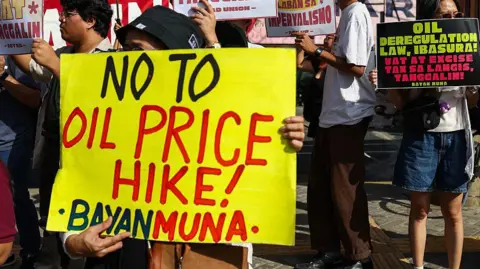
Asia-Pacific Nations Implement Cost-Cutting Measures
The ripple effect of soaring global energy prices is being felt across Asia, with various governments introducing measures to mitigate the economic impact. The Philippines has mandated a four-day work week for government employees, while Sri Lanka has declared Wednesdays a holiday for public institutions. Both Thailand and Vietnam are encouraging citizens to work from home to conserve fuel.
Further actions include orders for Thai civil servants to suspend overseas trips, wear short-sleeve shirts, and use stairs over lifts. In the Philippines, over 20 transport groups have declared a strike for March 26-27, demanding government action on rising fuel costs, mirroring a similar strike by Sri Lanka's private bus services.
Japan and South Korea, heavily reliant on oil and gas transiting the Strait of Hormuz, have been particularly affected. Japan saw gasoline prices reach a record high of 191 yen per litre last week. South Korean President Lee Jae Myung has directed public institutions to reduce passenger car use and cancelled plans to attend an international forum to lead the nation's emergency economic response.
Key Takeaways
- China has nearly halved planned fuel price increases, reducing petrol and diesel hikes by approximately 50%.
- The decision aims to "reduce the burden" on China's 300 million drivers amidst a 20% surge in local fuel prices since the Iran conflict began.
- The Iran conflict has disrupted global oil shipping via the Strait of Hormuz, driving up international crude prices, with Brent crude briefly exceeding $100 a barrel.
- China, a major oil importer and holder of significant strategic reserves, has reportedly ordered refineries to cease fuel exports to manage domestic supply.
- Across Asia, countries like the Philippines, Sri Lanka, Thailand, Vietnam, Japan, and South Korea are implementing various measures, including work-from-home policies and public transport strikes, to cope with escalating energy costs.


0 Comments