
China Bans 'Bone Ash Apartments' Amid Soaring Funeral Costs and Property Woes
The Chinese government has enacted a new law prohibiting the storage of cremated remains in residential properties, effectively outlawing the practice of establishing 'bone ash apartments.' This measure addresses a growing trend where families repurposed empty flats into ancestral shrines due to the country's high funeral expenses and scarce, costly cemetery plots.
The Rise of Unconventional Memorials
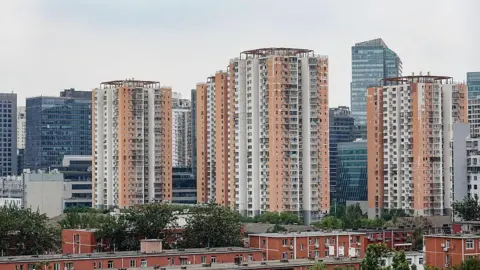
For years, many Chinese mourners have turned to purchasing empty residential units, dubbed "bone ash apartments," as an alternative to traditional burial options. These properties, often identifiable by sealed-off windows or closed curtains, served as private ritual halls where the ashes of loved ones were placed, transforming the living spaces into personal ancestral shrines.
This practice gained traction as a cost-effective solution amidst plummeting property prices—reportedly down 40% in 2025 from 2021—making an apartment purchase more affordable than securing a long-term cemetery plot.
Exorbitant Funeral and Cemetery Expenses
The high cost of end-of-life services in China has been a significant driver behind the "bone ash apartment" phenomenon. Cemetery spaces are not only limited but come with temporary leases, typically requiring renewal every two decades. Prices for burial plots in Beijing can range from approximately 10,000 yuan (£1,095) to a staggering 300,000 yuan (£32,841) for a standard tombstone.
A 2020 survey by British insurance firm SunLife revealed that funeral costs in China amounted to nearly half of the average annual salary, highlighting the substantial financial burden on families.
The move to ban 'bone ash apartments' underscores a broader societal challenge in China: balancing traditional veneration of ancestors with modern economic realities and urban planning demands. It reflects the inventive, albeit unconventional, lengths families will go to honor their deceased in the face of prohibitive costs and limited resources.
Government Intervention and Public Reaction
The new legislation explicitly bans the use of residential properties "specifically for the placement of ashes" and restricts burials to designated cemeteries or ecological burial areas. The timing of the ban, just days before the Qingming Festival (Tomb Sweeping Day), a period dedicated to honoring ancestors, is particularly notable.
The State Administration for Market Regulation and the Ministry of Civil Affairs have also announced new requirements for the funeral industry, aiming to increase transparency, tackle fraud, and reduce overall funeral costs. Public reaction on social media platforms like Weibo indicates widespread concern over the affordability of cemetery plots and questions regarding the enforceability of the new ban.
Key Takeaways
- China has banned the practice of storing cremated remains in residential properties, known as 'bone ash apartments.'
- The ban addresses a trend driven by the high cost and scarcity of traditional cemetery plots, which became more expensive than purchasing empty flats.
- 'Bone ash apartments' served as private ancestral shrines for families unable to afford conventional burial costs.
- The new law aims to regulate the funeral industry, reduce financial burdens on citizens, and ensure proper use of residential properties.
- The legislation was introduced shortly before the Qingming Festival, a significant day for ancestor worship in China.


0 Comments