
Best Air Purifiers of 2026: Combatting Allergies and Indoor Pollutants
As winter gives way to spring, Olley residents face a new challenge: allergy season. With closed windows due to lingering cold, heating systems, and even humidifiers contributing to indoor air issues, managing home air quality becomes crucial. A reliable air purifier can offer significant relief from allergens and various indoor pollutants.
To help navigate the market, CNET's expert team rigorously tested 15 new air purifiers, evaluating them for particle filtering speed (T90), noise levels, and energy efficiency. Their comprehensive lab tests led to the identification of the top performers, including two models earning CNET's inaugural lab awards for exceptional particle removal speed.

Best Overall and Quietest Top Performer: Blueair Blue Pure 311i Max
The Blueair Blue Pure 311i Max emerges as CNET's pick for the best overall air purifier, offering a remarkable balance of particle removal speed, low noise, and energy efficiency. Priced affordably at around $230, its lightweight and compact design makes it suitable for most homes without needing to tackle exceptionally large spaces.
- Pros:
- Offers the best balance of particle removal speed, noise, and energy efficiency
- Lightweight and fairly compact design
- Quiet at 43.31 decibels on mid fan setting, and 34.84 dBA on low setting
- Energy efficient at 11.65kWh draw
- Includes smart features like automatic mode and voice commands, app control, and a five-color air quality indicator
- Cons:
- Not the best option for larger spaces
- Doesn't necessarily excel at any one particle type
During lab tests, the Blueair 311i Max demonstrated effective smoke particle clearance in 1 minute and 28 seconds (T90 average), making it highly efficient. Its low noise output, even at higher settings (51.95dBA max), ensures it won't disrupt daily life or sleep. While not ideal for whole-home purification or extreme speed for specific particle types, its balanced performance and smart features make it a top choice for general home use.

CNET Lab Award Winners: Power and Speed for Every Home
For those prioritizing sheer speed in particle removal, two models earned CNET's first-ever lab awards. The Coway Airmega 400S was recognized for the fastest particle removal on a high fan setting, clearing 90% of particles in a remarkable 21 seconds. The Shark HP232 Air Purifier Max secured its award for the fastest particle removal at a low fan setting, achieving a 1 minute and 17 second T90 time and proving to be the most energy-efficient unit to run.

Coway Airmega 400S: For Large Homes and Rapid Clearing
The Coway Airmega 400S is designed for large homes and open spaces where fast particle removal is paramount. Despite its expensive $750 price tag, it delivered exceptional performance, ranking second overall in particle removal (1 minute 26 seconds T90) and winning a lab award for its high-fan efficiency.
- Pros:
- Second in overall particle removal with a 1-minute and 26-second T90 time
- Most efficient particle removal at high fan setting at 21 seconds (Lab Award winner)
- Can clean up to 3,100 square feet in about an hour and has a high CADR (Clean Air Delivery Rate)
- Features Wi-Fi, app control, auto mode, and air quality monitoring and indicator
- Cons:
- Expensive at $750 full price
- Noisy at high fan at 55.53dBA
- Ranks near the bottom in energy efficiency with 24.12kWh draw
- Large and bulky footprint
This high-capacity model boasts a sophisticated four-layer filtration system capable of handling particles as small as 0.1 microns. It offers full smart features including app and voice control, sleep, eco modes, and real-time air quality monitoring. However, its size, energy consumption, and noise levels at high settings are significant trade-offs.
Shark HP232 Air Purifier Max: Efficient Speed at Lower Settings
The Shark HP232 stands out for its great particle removal efficiency, particularly at lower fan settings. It achieved the fastest overall particle removal speed at 1 minute and 17 seconds T90 and earned a lab award for its efficiency at low fan settings. It is also noted as the cheapest large air purifier to run.
- Pros:
- Fastest particle removal between PM0.5 to PM2.5 at low fan settings (Lab Award winner)
- Energy efficient at 11.50 kWh draw and the cheapest large air purifier to run
- Fairly quiet at medium fan at 44.13 dBa, and 37.31 dBA at low fan
- Includes air quality particle indicator and automatic mode
- Cons:
- Particle removal at high fan is T90 1 minute and 9 seconds, slower than other similar units
- At high fan is on the louder side at 54.51dBA
- No app or remote included
Excellent for clearing dust, pollen, and smoke, the HP232 offers robust performance for rooms up to 1,200 square feet at a reasonable $330. While its high-fan speed performance is not its strongest suit, its quiet and efficient operation at lower settings makes it an attractive option for those prioritizing quick cleanup without high energy costs or excessive noise. Its lack of smart app or remote control is a notable omission.
Windmill 3-in-1 Air Purifier: Fine Particle Specialist for Personal Spaces
For quick clearing of fine particles in smaller areas like bedrooms or home offices, the Windmill 3-in-1 air purifier is a strong contender. It excels at filtering allergens and smoke residue, targeting particles around 0.3 micrometers, and boasts an attractive design.
- Pros:
- Best fine particle clearing at T90 time of 1 minute, 7 seconds
- Energy efficient at 9.61kWh monthly draw
- Quiet at 43.87dBA average
- Nice design touches with real bamboo finishes and three color options
- Cons:
- Slow overall particle removal with an average T90 of 2 minutes and 13 seconds
- No remote control
While its overall particle removal speed might lag behind competitors, its specialized focus on fine particles combined with excellent energy efficiency and quiet operation makes it ideal for allergy sufferers. Its $400 price positions it in the mid-to-upper range for its size.
Oransi Mod Plus: Coarse Particle Powerhouse with Caveats
The Oransi Mod Plus is a large, powerful unit best suited for rapidly filtering coarse particles such as sand, pet dander, or heavy pollen. It offers robust particle removal across the board, with particular strength for coarse particles.
- Pros:
- Average T90 of 1 minute and 29 seconds for overall particle removal
- Most efficient for coarse particle removal at T90 52 seconds
- Second fastest at high fan setting at 44 seconds
- Made in the US, includes an air quality indicator and 12 fan speed settings
- Cons:
- No app or smart features
- Highest energy draw at 66.66 kWh for a month of use
- Loudest air purifier at 62.80 dBA at high fan and loudest across all fan settings (49.65 dBA average)
- Heavy and large at 23 pounds
This US-made air purifier delivers quick cleaning, especially at high fan settings, making it effective for environments with significant coarse pollutants. However, its high price tag of $850, considerable noise output, and high energy consumption are significant considerations. It lacks modern smart features, relying on an air quality indicator for user feedback.
Other Models Tested: Notable Mentions and Specific Uses
CNET also evaluated several other air purifiers, each with unique characteristics. The **Dyson Purifier Cool Formaldehyde TP09**, while sleek and multi-functional, performed poorly in CNET's specific smoke chamber test due to its optimized airflow system for larger volumes, not a reflection of a defect. The **Shark HP102** is a compact, quiet, and energy-efficient option suitable for small rooms, despite a slower particle removal time in the lab environment.

Other units like the Airdog X5, Coway Airmega AP-1512HH, Levoit Core 400S-P, and Germ Guardian AC4300 showed varying levels of performance, energy consumption, and features. While some offered decent overall cleaning or specialized functions (like UV-C bulbs in the EnviroKlenz Mobile UV), they often presented trade-offs in terms of price, noise, or efficiency that kept them from the top recommendations.
Understanding Indoor Air Quality and Your Health
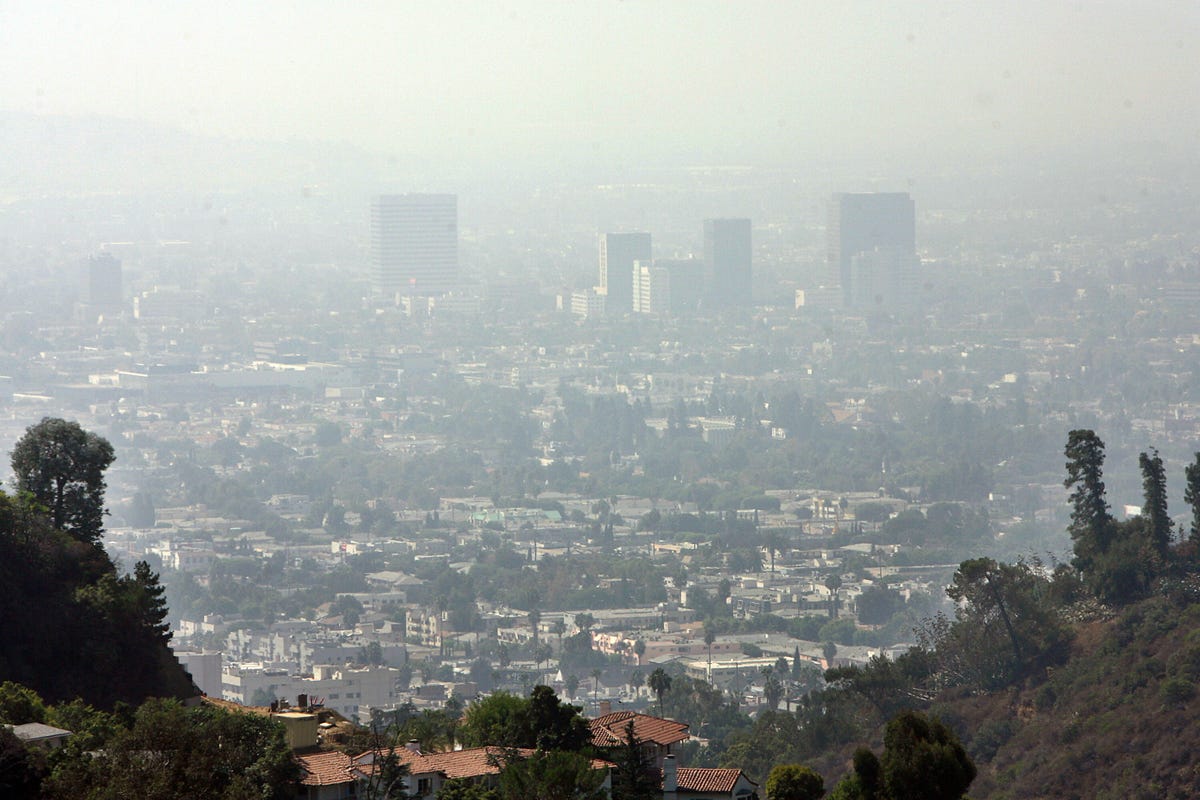
The air inside our homes is a mix of natural and human-generated particles, including allergens, toxins, and emissions from cooking or construction materials. Dr. Mark Hyman, chief medical officer at Function Health, emphasizes that "We're constantly breathing in particles, allergens and toxins that can impact our health." Indoor air pollution contributes to millions of deaths worldwide annually, according to the World Health Organization.
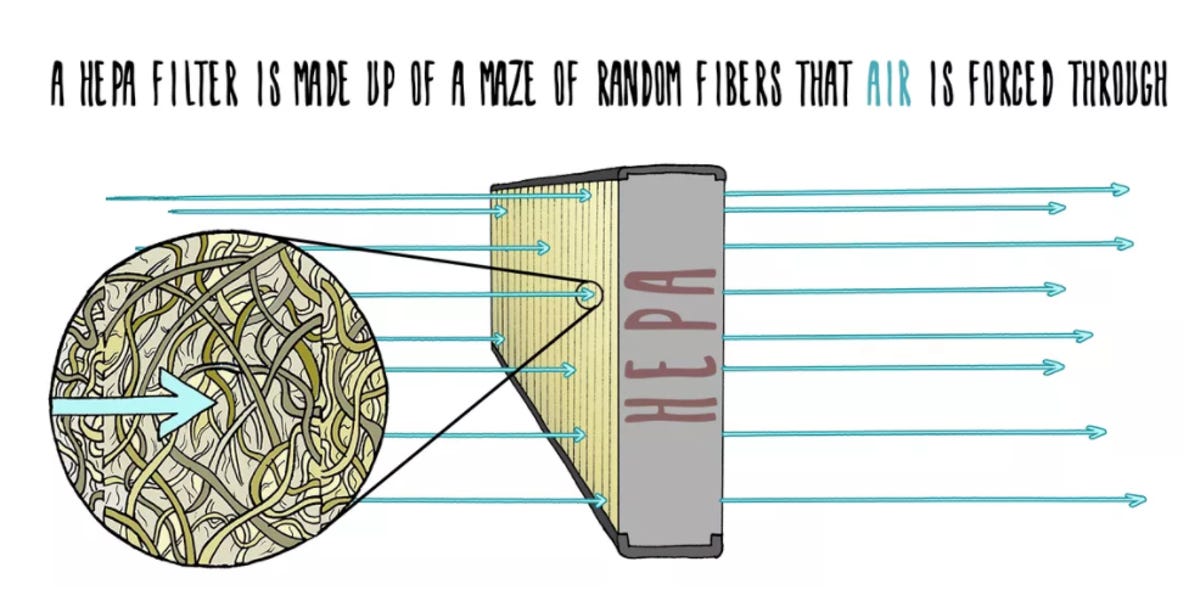
Air purifiers, especially those with HEPA filters, can significantly reduce health risks by filtering out 99.97% of airborne particles 0.3 microns and larger, including pollen, dust, pet dander, and smoke. Some models also incorporate UV-C light to neutralize airborne viruses, bacteria, and mold.
Those with existing respiratory issues, pet owners (as 6 out of 10 people are exposed to cat or dog dander), and individuals in areas affected by smoke or heavy outdoor pollution can particularly benefit. While air purifiers are a powerful tool, they are best used as part of a broader strategy for clean indoor air, alongside regular cleaning and proper ventilation.

Air Purifier Buying Guide: Key Considerations for Olley Shoppers
Choosing the right air purifier involves more than just price. Consider these factors when making your selection:
- Coverage and Size: Ensure the unit's square footage capacity matches your room size. A smaller purifier for a larger room will lead to unsatisfactory results.
- Budget: Factor in not only the initial purchase cost but also the ongoing expense of replacing filters, typically every six to twelve months.
- Filtration Technology:
- HEPA filters are the gold standard, trapping 99.97% of particles 0.3 microns and larger.
- Activated Carbon filters are excellent for removing gases and odors from pets, cooking, or smoke.
- Negative Ion purifiers are often cautioned against by experts due to potential ozone byproduct generation.
- UVGI (Ultraviolet Germicidal Irradiation) uses UV light to neutralize pathogens, typically found in larger systems.
- CADR (Clean Air Delivery Rate): This measure indicates how quickly an air purifier cleans the air. A general rule is that the CADR should be at least two-thirds of the room's area in cubic feet.
- Placement: For optimal efficiency, place your air purifier as centrally as possible, allowing several inches of clearance from walls and furniture. Positioning it near doorways or vents can also enhance airflow.
Emerging trends in 2026 include smaller, more effective units like Dyson's HushJet Purifier Compact, and innovations that reduce filter replacement frequency, such as Shark's NeverChange line. Some new models, like Innova NanoJet's AirSancta CDa Mini, even utilize water droplets instead of traditional filters.
Key Takeaways
- As allergy season begins, indoor air quality is a significant health concern for Olley residents.
- CNET's extensive lab tests evaluated 15 new air purifiers for particle removal speed (T90), noise, and energy efficiency.
- The Blueair Blue Pure 311i Max is recommended as the best overall choice for its balanced performance, quiet operation, and energy efficiency.
- The Coway Airmega 400S and Shark HP232 received CNET Lab Awards for fastest particle removal at high and low fan settings, respectively.
- When buying, consider room size, budget (including filter replacements), and specific pollutant concerns (allergens, smoke, pet dander, odors).
- Air purifiers are most effective when combined with regular cleaning and good ventilation, not as a standalone solution for all indoor pollutants.
As Olley residents prepare for spring, understanding the subtle impact of indoor air quality can be as crucial as monitoring outdoor conditions. The right air purifier can transform a home environment, offering relief from seasonal allergies and everyday pollutants. Keeping up with maintenance, such as regular filter changes and strategic placement, will maximize their effectiveness in your home.


0 Comments